
Pruning
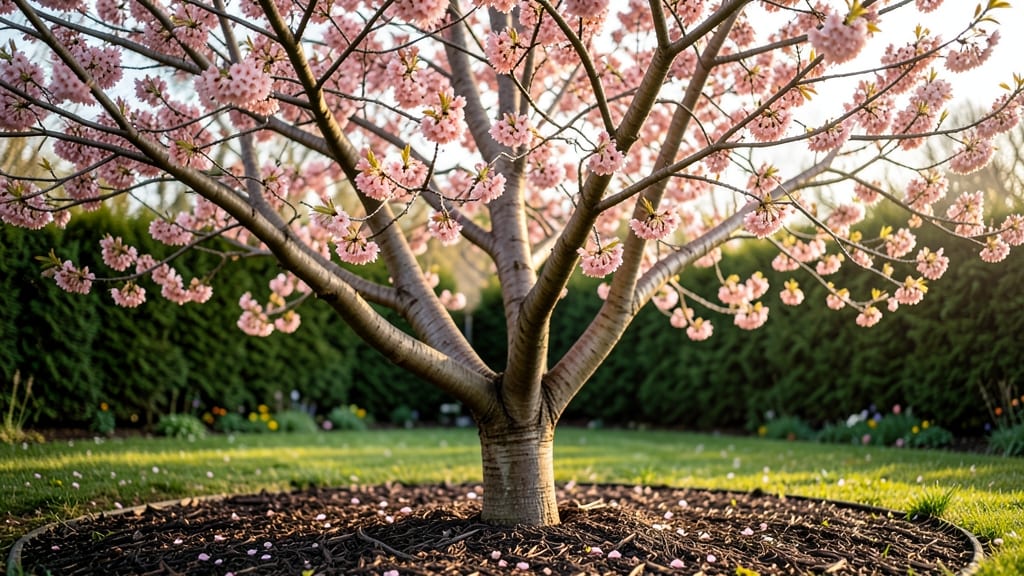
Flowering cherry tree roots spread aggressively through shallow, wide-reaching lateral roots and deep taproots, often extending beyond the tree’s canopy. They can damage sidewalks, driveways, and nearby structures if unmanaged, requiring careful planting and pruning to control growth.
Understanding how these roots behave is key to preventing headaches down the line. 🌳 Unlike slower-growing trees, flowering cherries develop a dense network of roots just below the surface—sometimes within the first 12 inches of soil—which makes them particularly invasive.
The deep taproots anchor the tree while the lateral roots spread horizontally, competing with nearby plants for nutrients and moisture. This aggressive growth pattern is why I always recommend planting them at least 20 feet away from structures and monitoring their progress annually.
What’s especially tricky is that these roots don’t just stay put—they can lift concrete over time if given enough space. Root barriers made of plastic or metal can help redirect growth, but they need to be installed at planting and buried at least 3 feet deep.
Pruning isn’t just about shaping the branches; it’s also about managing the root system’s energy. Cutting back 10-20% of the canopy in late winter can reduce root pressure, though this should be done by a professional to avoid stressing the tree.
💡 In This Article
- How Flowering Cherry Tree Roots Spread and Invade
- Managing Flowering Cherry Tree Roots: Best Practices
How flowering cherry tree roots spread and invade
Flowering cherry trees develop a dual root system designed for rapid expansion. The shallow lateral roots spread horizontally just beneath the soil surface—often within the top 12-18 inches—forming a dense web that competes aggressively with surrounding plants for water and nutrients.
Meanwhile, the deep taproot anchors the tree vertically, reaching depths of 3-5 feet or more, which explains their remarkable stability even in windy conditions.
This dual system allows them to outcompete grasses and shrubs within a 5-10 foot radius annually, making them particularly invasive compared to slower-growing ornamentals like Japanese maples.
The real challenge lies in how these roots exploit soil moisture.
Flowering cherries thrive in well-drained soils but can adapt to clay or sandy conditions by extending their lateral roots even wider when water is scarce. 🌱 What’s surprising is that their root spread often exceeds the tree’s canopy by 30-50%, meaning a 20-foot-tall tree might have roots stretching 25-30 feet in all directions.
This horizontal dominance is why sidewalks and driveways near these trees frequently crack—roots can exert up to 15,000 pounds of pressure per square foot as they expand.
Another critical factor is their symbiotic relationship with soil microbes. Flowering cherries form mycorrhizal associations that enhance nutrient uptake, allowing them to thrive even in nutrient-poor soils. These fungal partnerships enable their roots to access phosphorus and nitrogen more efficiently than many other trees, fueling their rapid growth.
The result? A tree that not only spreads faster but also depletes nearby plants of essential resources, creating a "root zone monopoly" that suppresses competition.
What most gardeners don’t realize is how quickly these roots respond to environmental cues. When soil moisture drops below 30% saturation, lateral roots can extend an additional 2-3 feet per year in search of water.
This adaptive behavior makes them particularly problematic in drought-prone areas, where their thirsty roots can even tap into irrigation systems or nearby foundations. The combination of aggressive lateral spread and deep anchoring explains why they’re classified as moderately invasive—far more so than their delicate, blossom-heavy appearance might suggest.
Visually, you can often spot their invasive nature by looking for root humps near the soil surface—raised areas where lateral roots have lifted the ground. These humps are a clear warning sign that the tree is actively expanding its territory.
The texture of the soil near these roots also changes, becoming denser and more compacted as the roots press outward. In extreme cases, you might even see root crowns (where the trunk meets the soil) developing multiple shoots, indicating the tree is putting extra energy into horizontal growth.
The science behind their spread lies in their growth hormones. Flowering cherries produce high levels of auxin, a plant hormone that stimulates root elongation while inhibiting nearby plant growth. This hormonal dominance is why grass and ground covers often die in a 10-foot radius around mature specimens.
The roots also secrete organic acids that break down soil minerals, further enhancing their nutrient access while creating an inhospitable environment for competing plants. 🌿