
Flowers
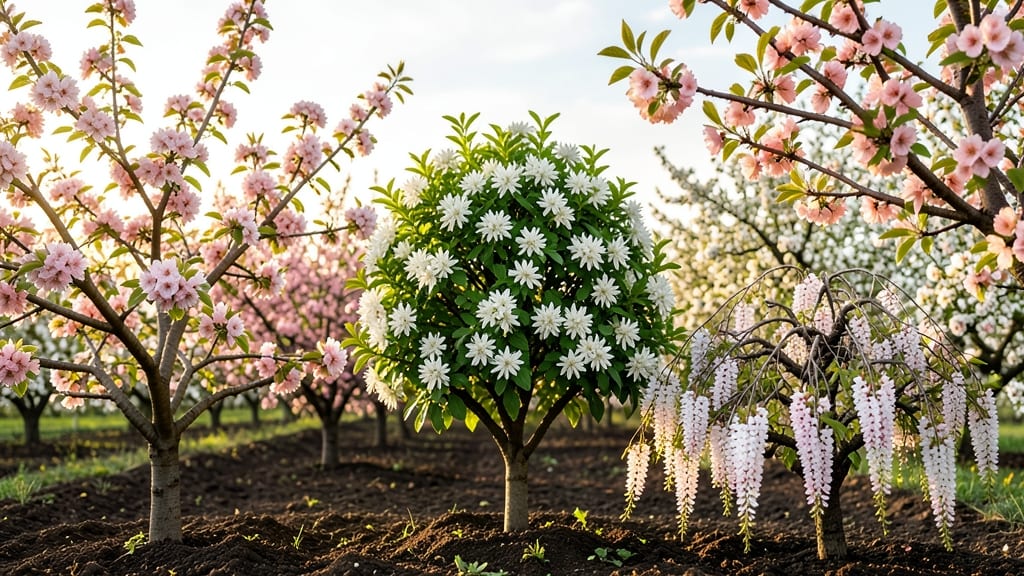
Mastering fruit tree flowers identification is the first step to unlocking a season of bountiful harvests. 🌸 Those delicate blossoms may all look similar at first glance, but each type—from apple’s rosy clusters to peach’s fuzzy pink pom-poms—has distinct clues that tell you exactly when to prune, what pests to watch for, and how to attract the best pollinators.
I’ve spent years studying these seasonal blooms, and once you recognize the patterns, your garden becomes a well-timed symphony of growth.
The key is noticing three things: color, shape, and timing. Apple blossoms arrive in late winter as clusters of five delicate petals, while pear flowers open later in early spring with just four petals and a subtle citrusy scent.
Cherry trees burst into showy white or pink umbrellas that bees can’t resist, while plum flowers appear as single, cup-shaped blooms on bare branches. These differences aren’t just pretty—they dictate when to trim (right after flowering) and which pollinators to welcome.
Once you start recognizing these blooms, your garden transforms. You’ll prune at the perfect moment to encourage fruit set, spot early signs of pests like codling moths before they strike, and create a timeline for pollinator-friendly care.
Imagine snipping away dead wood just as the bees arrive for your peach tree’s fuzzy pink feast—or knowing exactly when to thin blossoms to prevent overcrowded fruit. It’s like reading nature’s schedule.
This works for any yard, from a single backyard tree to a full orchard. Whether you’re growing apples, pears, cherries, or plums, the same principles apply. Let’s turn those blossoms into a roadmap for your most productive season yet.
What Triggers Flowering in Fruit Trees
Fruit tree flowers are nature’s way of signaling the start of a bountiful harvest—but why do they bloom when they do? The answer lies in a mix of environmental cues, biological triggers, and even the tree’s own internal clock.
Understanding these factors helps gardeners predict flowering patterns, plan pruning, and support pollinators. Let’s break down the key reasons behind the magic of fruit tree blooms.
Many fruit trees require a period of cold temperatures—called chill hours—to break dormancy and trigger flowering. For example:
- Peach and cherry trees need 300–1,000 chill hours (below 45°F/7°C) to bloom reliably. Without enough cold, buds may fail to open, or flowers could drop prematurely.
- Citrus trees (like oranges) often bloom in warmer climates but may need a brief cold snap to synchronize flowering with pollinator activity.
- Tropical fruit trees (e.g., mangoes or lychees) typically bloom in response to dry seasons or temperature drops, even if mild.
Actionable tip: Check your region’s chill hours and choose fruit trees matched to your climate. If your area lacks sufficient cold, consider varieties bred for low-chill zones (like Lapins peaches or Tropic Beauty plums).
Fruit trees are sensitive to photoperiodism—the length of daylight they receive. Two main patterns emerge:
- Long-day plants (e.g., apples, pears): These trees bloom when daylight exceeds 12–14 hours, typically in spring. Shorter days in fall can signal bud formation for next year’s flowers.
- Short-day plants (e.g., some figs, loquats): These may bloom in response to shorter days, often in late summer or fall, especially in warmer climates.
- Day-neutral plants (e.g., citrus, olives): These bloom regardless of day length but still need temperature cues to start the process.
Pro tip: If your tree isn’t flowering, check for light obstructions (like overhanging branches or buildings). Some trees need 6+ hours of direct sunlight daily to trigger blooming hormones.
Counterintuitively, mild stress—like drought or nutrient deficits—can sometimes boost flowering. Here’s how:
- Drought stress: Trees like peaches or apricots may produce more flowers if water is limited during bud formation. However, too much stress can cause bud drop.
- Nitrogen imbalance: Excess nitrogen promotes leafy growth at the expense of flowers. A balanced NPK ratio (e.g., 10-10-10) supports blooming.
- Potassium and phosphorus: These nutrients are critical for flower development. A soil test can reveal deficiencies (e.g., low phosphorus may delay blooming).
Warning: Don’t rely on stress to trigger flowers—consistent irrigation and mulching (to retain moisture) are safer for long-term tree health. 💡 Use drip irrigation to deliver water directly to roots without over-saturating the soil.
Young fruit trees often focus energy on root and stem growth rather than flowering. Here’s the timeline:
| Tree Type | Typical Flowering Age | Notes |
|---|---|---|
| Apple/Pear | 3–5 years | Dwarf varieties may bloom earlier (1–2 years). |
| Peach/Nectarine | 2–4 years | Can produce light blooms as early as 1 year. |
| Citrus (e.g., lemon, orange) | 3–6 years | May take longer in containers or high-nitrogen soils. |
| Avocado | 5–7 years | Requires two compatible varieties for pollination. |
Actionable tip: Avoid heavy pruning or fertilizing young trees—this can delay flowering. Instead, focus on root development by watering deeply and using organic matter (like compost) to build soil health.
While not a direct cause of flowering, pollinators (bees, butterflies, hummingbirds) play a role in fruit set after blooms appear. Some trees even time their flowering to align with pollinator activity:
- Early bloomers (e.g., almonds, cherries): Rely on bees emerging from winter dormancy.
- Late bloomers (e.g., blueberries, some apples): May bloom when pollinators are most active.
- Self-pollinating trees (e.g., figs, some plums): Still benefit from pollinators for stronger fruit development.
What if pollinators are scarce? Plant native flowering plants near your fruit trees (e.g., lavender, clover, or viburnum) to attract them. Avoid pesticides during bloom time! 🎯 Hand-pollination (gently shaking branches) can help in extreme cases.
Not all fruit trees bloom at the same time—or even every year! Genetics dictate:
- Biennial bearing: Some trees (like peaches or citrus) alternate between heavy bloom/light crop years and light bloom/heavy crop years. This is a survival strategy to avoid overproduction.
- Dwarf vs. standard trees: Dwarf varieties may bloom earlier but produce smaller fruit loads. Standard trees often have delayed but more robust flowering.
- Rootstock influence: Grafted trees (e.g., apple trees on M.9 rootstock) may bloom differently than seed-grown trees.
Solution: If your tree skips a year, don’t panic! Choose varieties known for consistent blooming (e.g., Anna apples or Elberta peaches) or practice thinning flowers in heavy-bloom years to encourage return blooms.
Quick Fixes for Common Flower Issues
Identifying fruit tree flowers is only half the battle—keeping them healthy and thriving requires action. Whether your blooms are sparse, diseased, or just not producing fruit, these practical solutions will help you revive your trees and ensure a bountiful harvest.
Below, we’ve mapped common problems to their fixes, along with prevention tips to keep your trees in peak condition.
Cause: Insufficient sunlight, improper pruning, or nutrient deficiencies.
🔧 Fix It:
- Boost Sunlight Exposure 🌞 Move young trees to a sunnier spot if possible, or thin out nearby shade trees/shrubs. Most fruit trees need 6–8 hours of direct sunlight daily for optimal blooming.
- Adjust Pruning Timing ⏰ Prune in late winter or early spring (before buds swell) to avoid removing next year’s flower buds. Avoid heavy pruning in fall, as this can stress the tree.
- Fertilize for Blooms 🌱 Use a balanced fertilizer (10-10-10) in early spring, followed by a phosphorus-rich fertilizer (5-10-10) when buds form. Avoid nitrogen-heavy fertilizers, which promote leafy growth at the expense of flowers.
💡 Prevention Tips:
- Plant trees in well-draining soil with a pH of 6.0–7.0 (test your soil annually).
- Mulch around the base (but not touching the trunk) to retain moisture and regulate temperature.
- Choose dwarf or semi-dwarf varieties for smaller spaces—they often bloom more reliably.
Cause: Lack of pollinators, incompatible varieties, or poor timing.
🔧 Fix It:
- Attract Pollinators 🐝🌼 Plant bee-friendly flowers (like lavender, marigolds, or clover) near your fruit trees. Avoid pesticides during bloom season—opt for neem oil or horticultural soap instead.
- Check Pollination Compatibility 🔄 Some fruit trees (e.g., apples, pears) require cross-pollination. Plant two compatible varieties within 50–100 feet of each other. For self-pollinating trees (like peaches), hand-pollinate by gently shaking branches during bloom.
- Time It Right ⏳ If frost threatens early blooms, cover trees with frost cloth at night. Late frosts can kill flowers before pollination occurs.
💡 Prevention Tips:
- Research tree compatibility before planting (e.g., ‘Honeycrisp’ apples need a pollinator like ‘Golden Delicious’).
- Install bee houses or pollinator gardens to ensure consistent visitors.
- Thin flowers if overabundant—this directs energy to fewer, healthier fruits.
Cause: Fungal infections (e.g., powdery mildew, blossom blight), bacterial spots, or pests.
🔧 Fix It:
- Remove Affected Blooms 🧹 Prune infected flowers and leaves immediately with sterilized shears (wipe with rubbing alcohol between cuts). Dispose of debris in the trash, not compost.
- Apply Fungicides Early 🛡️ Use copper fungicide or baking soda spray (1 tsp baking soda + 1 quart water + a drop of dish soap) before blooms open for prevention. For severe cases, try neem oil (follow label instructions).
- Improve Air Circulation 💨 Thin out dense branches to reduce humidity, which fungal spores love. Space trees 15–20 feet apart (depending on variety).
💡 Prevention Tips:
- Water at the base (avoid overhead sprinkling) to keep foliage dry.
- Clean tools after each use to prevent spreading disease.
- Choose resistant varieties (e.g., ‘Liberty’ apple trees resist fire blight).
Cause: Aphids, mites, or borers feeding on buds/flowers.
🔧 Fix It:
- Blast Off Pests 💦 Spray water jets (from a hose) to dislodge aphids or mites. Repeat every few days until pests vanish.
- Use Natural Predators 🐞 Introduce ladybugs, lacewings, or parasitic wasps (available at garden centers) to control soft-bodied pests.
- Apply Organic Sprays 🌿 Mix 1 tsp cayenne pepper + 1 quart water for a mild repellent, or use insecticidal soap (test on a small area first).
💡 Prevention Tips:
- Inspect trees weekly during bloom season for early signs of pests.
- Remove fallen petals/debris to eliminate hiding spots for pests.
- Plant companion plants like garlic or chives, which repel many insects.
Keep these habits up to ensure your fruit tree flowers stay vibrant and productive:
- Prune annually to remove dead/diseased wood and improve airflow.
- Monitor weather—late frosts or heatwaves can stress blooms.
- Test soil every 2–3 years to adjust nutrients as needed.
- Keep a garden journal to track blooming patterns and issues year over year.
Frequently asked questions about identifying fruit tree flowers
How can I tell the difference between apple and pear tree flowers?
Apple tree flowers have 5 delicate petals arranged in clusters, while pear flowers feature 4 petals and a subtle citrusy scent. Apples bloom slightly earlier in late winter, while pears open their blossoms in early spring. Look for the petal count and timing—these are your best clues!
Why do some fruit tree flowers drop before they turn into fruit?
This happens when trees experience late frost, drought stress, or pollinator shortages. For example, peach blossoms often drop if temperatures drop below 28°F (-2°C) after opening. To prevent this, cover young trees with frost cloth or plant pollinator-friendly flowers nearby to ensure proper fruit set.
Can I identify fruit trees by their flowers alone, or do I need to look at leaves too?
While flowers provide key clues, leaves help confirm the ID. For instance, cherry blossoms are showy but their lance-shaped leaves with serrated edges are distinctive. Pair flower shape with leaf texture—smooth, lobed, or serrated—and you’ll narrow it down faster. A magnifying glass helps spot tiny details like leaf hairs or vein patterns.
What’s the best time of day to observe fruit tree flowers for identification?
Morning is ideal because flowers are fully open and dew highlights their details. Avoid midday heat, which can cause petals to wilt. If you’re checking for pests, examine flowers in the late afternoon when insects are most active. Bring a small notebook to sketch shapes, colors, and any unusual patterns.
How do I know if my fruit tree flowers are healthy or diseased?
Healthy flowers should be vibrant in color, firm to the touch, and free of spots or discoloration. Look for powdery white residue (sign of mildew) or blackened buds (bacterial blight). If you see sticky sap or holes in petals, pests like aphids or borers may be the culprit. Act fast—remove infected blooms immediately and apply a copper fungicide if needed.