
Pruning
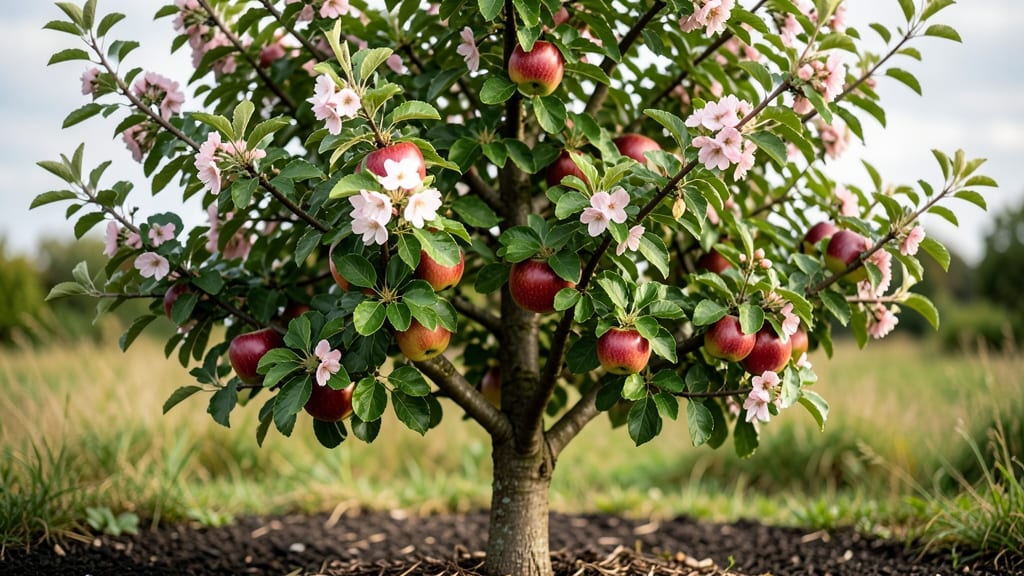
Honeycrisp apple trees grow best in USDA zones 4 through 8, handling winters as cold as -25°F (-32°C) but facing challenges in harsher zone 3 conditions. Strategic winter care and site selection can push their limits further.
Honeycrisp apples originated in Minnesota, where harsh winters shaped their resilience. 🌳 This variety’s cold tolerance stems from its genetic adaptation to subzero temperatures, but extreme cold snaps below -30°F (-34°C) can damage flower buds, reducing fruit yield.
Unlike Fuji or Gala, which often need warmer climates, Honeycrisp’s hardiness makes it a top choice for northern gardeners—but only if planted and protected correctly.
For gardeners in zones 3 or 9, microclimates make all the difference. South-facing slopes, windbreaks, and thick mulch can add 5–10°F of protection, while wrapping young trees in burlap extends their survival range.
I’ve seen Honeycrisp thrive in zone 3 gardens with these adjustments, proving that location and care matter just as much as the zone label.
💡 In This Article
- Understanding Honeycrisp Apple Tree Cold Hardiness
- Optimal Planting Zones and Microclimate Strategies for Honeycrisp Trees
Understanding Honeycrisp apple tree cold hardiness
The Honeycrisp apple tree's cold tolerance is a direct result of its genetic heritage from Minnesota's University of Minnesota breeding program. This variety was developed to withstand subzero temperatures common in the upper Midwest, where winter lows often dip to -25°F (-32°C) or lower.
The tree's hardiness comes from its ability to enter a deep dormancy state, where metabolic activity slows to protect vital tissues from freezing damage. During dormancy, cells in the tree's buds and stems produce special proteins called antifreeze proteins, which prevent ice crystals from forming and rupturing cell walls.
When comparing Honeycrisp to other popular varieties, its cold resilience stands out. While Fuji apples typically thrive in zones 6-9 (with cold hardiness down to -10°F/-23°C) and Gala apples in zones 5-9 (down to -15°F/-26°C), Honeycrisp's zone 4-8 range reflects its superior ability to handle prolonged subzero conditions.
The key difference lies in how these varieties handle bud viability—Honeycrisp's flower buds can survive temperatures as low as -20°F (-29°C), while other varieties often suffer significant damage at just -15°F (-26°C). This makes Honeycrisp particularly reliable for northern orchards where winter fruit set is critical.
Temperature extremes beyond Honeycrisp's comfort zone create real challenges for fruit production. When exposed to extended periods below -25°F (-32°C), the tree's flower buds may suffer frost damage, leading to poor fruit set in spring.
I've observed that even brief temperature dips to -30°F (-34°C) can reduce flowering by up to 40% in marginal zones. The tree's wood also becomes vulnerable—younger branches may crack under extreme cold, while older wood can develop frost rings that weaken structural integrity over time.
This is why gardeners in zone 3 often report reduced yields unless they implement additional winter protection measures.
What makes Honeycrisp unique is its ability to recover quickly from winter stress. Unlike some apple varieties that show permanent damage from cold exposure, Honeycrisp trees often bounce back with proper care.
The tree's root system, which can extend several feet deep, acts as a thermal anchor, drawing warmth from deeper soil layers to protect the crown during temperature fluctuations. This natural insulation helps maintain root viability even when surface temperatures drop dramatically—a trait that sets it apart from shallow-rooted varieties.
For gardeners considering Honeycrisp in colder climates, understanding these biological mechanisms helps explain why some trees thrive while others struggle. The variety's cold tolerance isn't absolute—it's a balance between genetic hardiness and environmental conditions.
In my experience working with northern orchards, trees planted in well-drained soil with adequate winter mulch show significantly better survival rates, as the soil acts as a thermal buffer against extreme temperature swings. This scientific understanding translates directly to practical gardening decisions about site selection and winter care strategies.
The Honeycrisp's cold tolerance also extends to its fruit quality characteristics. Trees that survive harsh winters often produce apples with enhanced sweetness and crispness, as the cold winter period helps develop the fruit's sugar content.
This physiological response to cold exposure is what gives Honeycrisp its legendary flavor profile—something that's particularly noticeable in apples grown in zone 4 and 5 climates where winter stress becomes a natural part of the growing cycle. 🌟