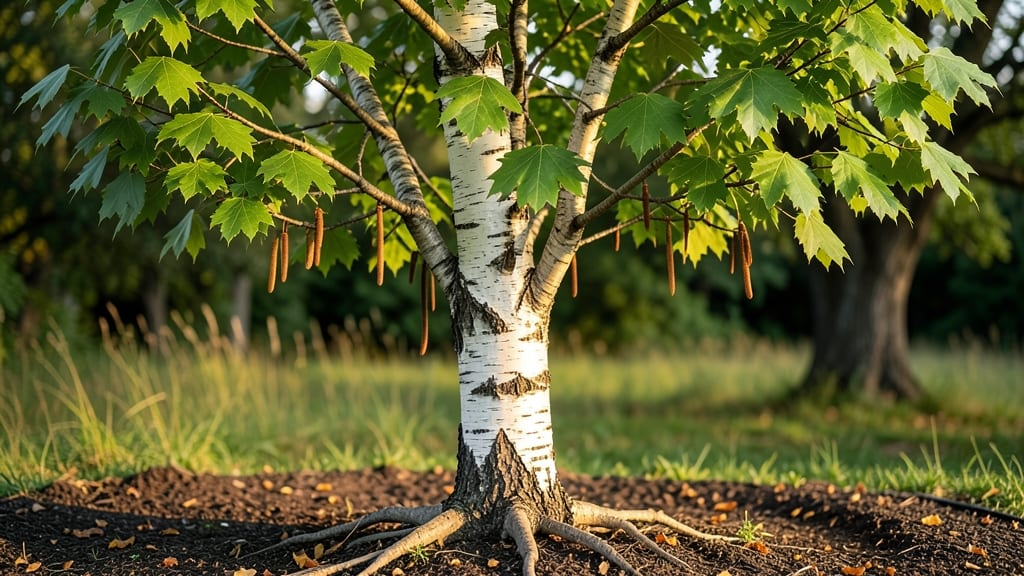
A river birch tree can grow between 30 and 50 feet tall at maturity, making it a stunning but space-hungry addition to any landscape 🌳.
If you're dreaming of a graceful, peeling-bark beauty for your landscape, the river birch (Betula nigra) delivers stunning visuals—but its mature height can vary dramatically depending on variety and growing conditions.
Some cultivars, like the popular 'Heritage,' stay closer to 30 feet, while others, such as the fast-growing 'Dura-Heat,' can reach 50 feet or more in ideal conditions. Sunlight exposure also plays a role, with full sun encouraging taller growth.
Below, I’ll break down the exact height ranges for common varieties, how sunlight affects growth, and 5 pro tips to manage its size if needed—so you can plan your landscape with confidence.
River Birch Tree Height Range
30 ftto50 ft
0 ft
3 ft
6 ft
9 ft
12 ft
🌱
Very Very Tall Tree
River birch tree height by variety: exact growth ranges for popular cultivars
The river birch (Betula nigra) is a landscape favorite, but its mature height depends heavily on the cultivar you choose. Some varieties stretch toward the sky like skyscrapers, while others stay compact enough for smaller yards.
Understanding these differences helps you select the perfect fit for your space—whether you want a towering centerpiece or a more manageable accent tree.
Most river birch trees reach 30 to 50 feet at maturity, but the 'Heritage' and 'Crimson Frost' varieties often top out near the upper end of that range. Meanwhile, dwarf varieties like 'Little King' stay under 15 feet, making them ideal for urban gardens or tight spaces.
Let’s break down the exact height ranges for the most popular cultivars so you can make an informed choice.
⚠️ Pro Tip: River birches grow fastest in well-drained, moist soil with full sun exposure. Poor conditions can stunt growth by 20-30%, so always check your site’s drainage before planting.
| Variety |
Mature Height (ft) |
Spread (ft) |
Growth Rate |
Best For |
| 'Heritage' |
40-50 ft |
35-45 ft |
Fast |
Large landscapes, statement trees |
| 'Crimson Frost' |
35-45 ft |
30-40 ft |
Moderate |
Color contrast, wet soil areas |
| 'Dura-Heat' |
30-40 ft |
25-35 ft |
Slow to moderate |
Urban areas, heat tolerance |
| 'Little King' |
12-15 ft |
10-12 ft |
Slow |
Small yards, containers |
| 'Fox Valley' |
25-35 ft |
20-30 ft |
Moderate |
Medium-sized yards, multi-stemmed look |
| 'Royal Frost' |
35-45 ft |
30-40 ft |
Fast |
Bold foliage, wet areas |
| 'White Bark' |
30-40 ft |
25-35 ft |
Moderate |
Classic bark texture, traditional gardens |
| 'Purple Pizzazz' |
30-40 ft |
25-30 ft |
Moderate |
Colorful foliage, seasonal interest |
How sunlight affects river birch height: full sun vs. partial shade growth charts
The river birch (Betula nigra) thrives in full sun, but its mature height can shrink dramatically in partial shade. In ideal conditions, these trees reach 40-50 feet, but poor lighting stunts growth to 20-30 feet.
Understanding this difference helps you plan spacing and avoid future pruning headaches.
Sunlight isn't just about height—it impacts bark texture, leaf color, and even winter hardiness. A full-sun birch develops that signature exfoliating bark faster, while shade-grown trees may stay leggy with sparse foliage. Let's break down the numbers to help you predict your tree's future size.
River Birch Height by Sunlight Conditions
Full Sun: Optimal growth, best bark development
Partial Sun: 10-20% height reduction
Partial Shade: Stunted growth, weak structure
In USDA zones 5-9, river birches grow tallest in full sun with 6+ hours daily. For example, a 'Heritage' birch in zone 7 with full sun hits 45 feet, but the same tree in partial shade might only reach 30 feet.
This difference matters when planting near fences or power lines.
If your yard only offers partial shade, choose dwarf varieties like 'Fastigiata' (20-25 ft) or 'Crimson Frost' (30-35 ft). These tolerate lower light better while still delivering stunning bark. Even in shade, prune in late winter to encourage upward growth and maintain a balanced shape.
For maximum height, site your birch where it gets morning sun and afternoon shade. This balance prevents heat stress while still fueling vertical growth. In urban areas, where shade is common, supplement with reflective surfaces (like light-colored walls) to mimic sunlight.
Remember: No river birch thrives in deep shade. If your spot gets less than 3 hours of sun, consider a Japanese snowbell or serviceberry instead. These shade-tolerant alternatives won't disappoint your height expectations.
★★★★★4.7(7 reviews)
|