
How To
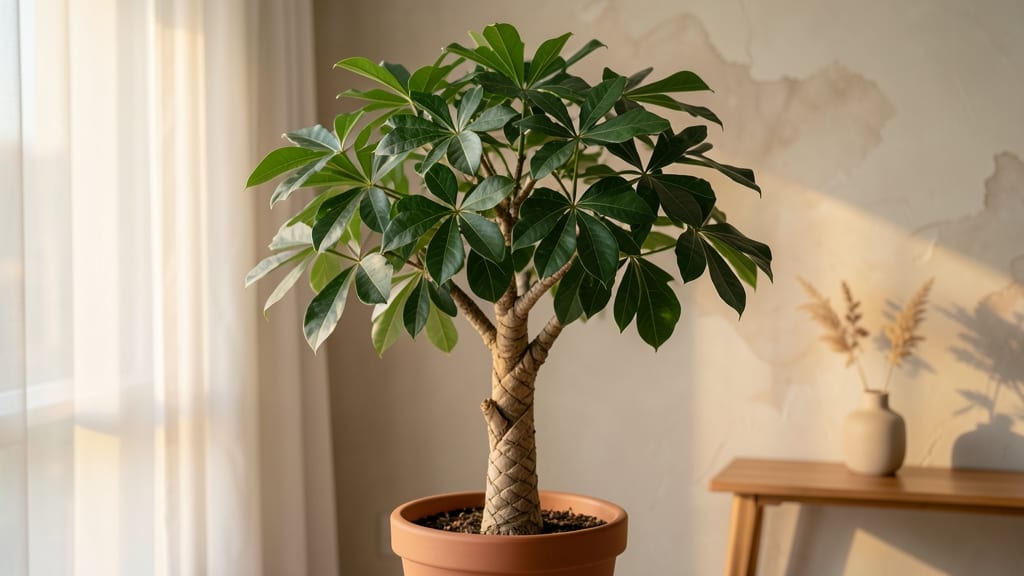
A money tree will grow between 2 and 6 feet tall indoors, depending on its variety and care routine—so yes, that ceiling fan might be in trouble if you’re not careful.
Picture this: You’ve nurtured your 🌿 Pachira aquatica for years, and suddenly it’s stretching toward the light like a teenager reaching for the cookie jar. The braided variety, in particular, can shoot up faster than you’d expect, while standard types tend to grow more gradually.
But here’s the good news—with the right pruning and light tricks, you can keep it compact and manageable.
Light exposure is the key player here. Too little, and your money tree will grow leggy and weak, reaching for any scrap of sunlight. Too much direct sun, and those lush leaves might start to crisp at the edges.
The sweet spot? Bright, indirect light for 4 to 6 hours a day, which is easier to achieve than you think.
In this guide, I’ll break down how tall each variety typically grows, when to prune for bushier (and shorter) growth, and how to spot when your money tree is getting a little too ambitious for its own good.

Money tree height limits by variety: how tall each type grows indoors
Your money tree (Pachira aquatica) can grow anywhere from 2 to 6 feet indoors, but its final height depends entirely on its variety and how you care for it.
The standard money tree typically reaches 4-5 feet with proper attention, while the braided variety can stretch taller—sometimes exceeding 6 feet—if left unpruned. Even dwarf varieties won’t stay small forever; they’ll still grow to 2-3 feet without intervention.
The key factor controlling height is light exposure. Money trees grow toward light sources, so placing yours near a south-facing window encourages vertical growth, while bright indirect light (like an east or west window) promotes bushier, more compact growth.
Without enough light, your tree will stretch leggy stems and weak leaves—clear signs it’s reaching for more sunlight.
Container size also plays a role. Money trees in smaller pots (like 6-8 inch diameters) stay shorter because their roots can’t expand much, forcing the plant to focus on foliage.
But if you repot into a large container, expect faster vertical growth as the roots have more room to support a taller stem. This is why many growers underpot their money trees to control height.
If you’re growing a braided money tree, don’t assume the braiding will stunt its height—it won’t. The braiding process itself is purely cosmetic, but the visual effect of intertwined trunks can make the plant appear taller than it actually is.
To keep a braided tree manageable, focus on pruning the top growth and pinching back new shoots regularly. This redirects energy toward lateral branches, creating a fuller, more balanced shape.
For slow-growing varieties, like the dwarf money tree, you might not need to prune for 2-3 years. These plants naturally stay shorter, making them ideal for small spaces or tabletops. However, even dwarf varieties will eventually outgrow their containers if left unchecked.
The secret to keeping them compact is consistent pruning—just a few strategic cuts can maintain their size while encouraging denser foliage.
One mistake many growers make is assuming that larger pots equal taller plants. While this is true to some extent, the relationship isn’t direct. A 12-inch pot might support a 5-foot tree, but a 6-inch pot can still accommodate a 3-foot tree if pruned correctly.
The key is to match pot size to your desired height—smaller pots = shorter trees, larger pots = taller potential.
Light quality matters just as much as quantity. Money trees thrive in bright indirect light, which prevents them from stretching toward a single light source.
If you notice your tree growing toward one window, it’s time to rotate the pot or move it to a spot with even light exposure on all sides. This simple adjustment can halve vertical growth while promoting a fuller, more balanced shape.
Remember, these height ranges are guidelines, not strict rules. With the right care—pruning, proper lighting, and container management—you can keep your money tree at almost any height you desire.
Whether you want a tabletop-sized plant or a tall statement piece, the tools to control its growth are already in your hands. 🌿✂️
How to control money tree height: pruning, training, and growth hacks
If your money tree (Pachira aquatica) is growing taller than your ceiling light fixture, don’t panic—you’re not powerless! With the right pruning techniques and growth hacks, you can keep this tropical beauty at your desired height while encouraging a fuller, bushier shape.
The key is understanding when and how to intervene without stressing your plant.
Braided money trees, in particular, often grow vertical first before filling out. While braiding itself doesn’t restrict height, it does create a natural framework that can guide your pruning efforts.
Whether you’re dealing with a 6-foot giant or a compact 2-foot dwarf, these methods will help you manage growth like a pro.
Step-by-Step Guide to Controlling Money Tree Height
- 1 Choose the right time to prune: Late spring or early summer, when your money tree is actively growing. Avoid pruning in winter as growth slows significantly.
- 2 Use sterilized pruning shears: Cut just above a leaf node (the bump where leaves attach) at a 45-degree angle. This encourages new growth from that spot.
- 3 Encourage bushier growth: Prune the topmost leaves to redirect energy to lower branches. This creates a fuller shape while slowing vertical growth.
- 4 Repot for compact growth: If your tree is root-bound, repotting into a smaller container (just 1-2 inches larger) forces it to focus on foliage over height.
- 5 Rotate for even growth: Turn your pot quarter-turn weekly to ensure all sides get equal light exposure, preventing lopsided height spikes.
One common misconception is that braiding a money tree will stunt its height—it won’t. Braiding is purely aesthetic and doesn’t affect growth patterns. However, braided trees often look taller visually because their trunks are intertwined, creating a longer central stem.
If you want to keep a braided tree compact, focus on pruning the top and pinching back new growth regularly.
For slow-growing varieties, like the dwarf money tree, you might only need to prune every 1-2 years. But faster-growing types can shoot up 12 inches in a season if left unchecked.
The trick is to prune lightly but often—removing just a few leaves at a time encourages denser foliage without shocking the plant.
Pro tip: If your money tree is leggy and sparse, it’s begging for a hard prune. Cut back one-third of the height in late winter or early spring.
New shoots will emerge from the leaf nodes, creating a bushier, more manageable shape within months. Just be patient—it may take 3-6 months to fill out.
With these techniques, you’ll keep your money tree at your desired height while maintaining its health and vibrancy. Whether you prefer a compact tabletop plant or a tall statement piece, the power is in your hands—literally, with those pruning shears! ✂️🌿