
How To
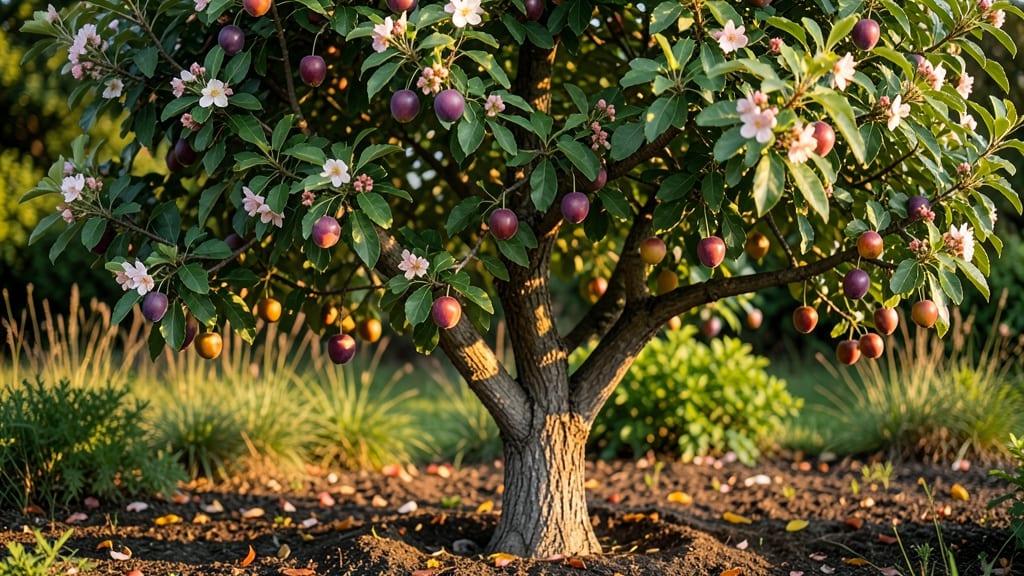
How tall a plum tree grows depends on the variety, ranging from 8 feet for dwarf types to towering 30 feet for standard varieties, depending on growing conditions.
Wondering if your backyard has enough space for a plum tree? The height of these fruit-bearing beauties varies wildly—from dwarf varieties perfect for containers to towering giants that need acres to thrive.
Before planting, knowing the mature size of your chosen plum variety could save you years of pruning headaches (or worse, a tree that outgrows its welcome).
European plums like the Santa Rosa typically reach 15–25 feet, while Japanese varieties such as Methley can soar past 25 feet. Even semi-dwarf types need careful spacing, as their branches spread nearly as wide as they grow tall.
Without proper planning, you might end up with a 🍑 that shades your entire patio—or worse, damages your roof.
In this guide, I’ll break down the exact heights for 12+ popular varieties, spacing rules to avoid conflicts with your home or neighbors’ property, and pruning tips to keep even the tallest trees manageable.
Whether you’re dreaming of a small patio plum or a full-size orchard, you’ll find the right fit for your space.

Plum tree height by variety: dwarf to standard sizes explained
Choosing a plum tree often comes down to one critical question: how tall does it grow? The answer varies dramatically between varieties, from dwarf grafted plums that stay under 10 feet to standard European plums that can dwarf your two-story house.
Understanding these differences helps you select the perfect tree for your space—whether it's a container garden or a sprawling orchard.
Most plum trees fall into three height categories: dwarf (8–12 ft), semi-dwarf (12–18 ft), and standard (20–30 ft). Dwarf varieties are often grafted onto semi-dwarf rootstock, keeping them manageable for small yards.
Meanwhile, standard trees require more space but produce larger fruit yields. Let’s break down the most popular varieties and their mature heights.
| Variety | Type | Mature Height (ft) | Best For |
|---|---|---|---|
| Santa Rosa | European | 15–20 ft | Standard orchards, large yards |
| Methley | European | 20–25 ft | Commercial orchards, rural areas |
| Stanley | European | 25–30 ft | Large estates, windbreaks |
| Larry Ann | Japanese | 12–15 ft | Small yards, ornamental |
| Methley (Dwarf) | European (grafted) | 8–10 ft | Containers, patios, urban gardens |
| Santa Rosa (Dwarf) | European (grafted) | 10–12 ft | Small orchards, home gardens |
| Black Diamond | Japanese | 15–20 ft | Medium yards, fruit production |
| Shiro | Japanese | 12–15 ft | Small spaces, ornamental |
| Elephant Heart | Hybrid | 20–25 ft | Large yards, fruit production |
| Fortune | Japanese | 10–12 ft | Containers, bonsai-style |
| Improved Egg | European | 18–22 ft | Medium yards, fruit production |
| Wickson | Japanese | 15–20 ft | Medium yards, ornamental |
European plums like Santa Rosa and Methley tend to reach 20–30 feet at maturity, making them ideal for rural settings or large properties. Their taller stature also allows for better air circulation, reducing disease risks like brown rot.
In contrast, Japanese plums like Larry Ann and Shiro often stay shorter (12–15 feet), making them perfect for urban gardens or small backyards.
If space is limited, consider dwarf grafted varieties. These are essentially miniature versions of their standard counterparts, achieved by grafting the desired plum variety onto a dwarfing rootstock.
For example, a dwarf Methley will max out at 8–10 feet, while a standard Methley can easily surpass 25 feet. This technique is a game-changer for container gardening or rooftop plots.
Hybrid varieties like Elephant Heart blend the best traits of European and Japanese plums, often reaching 20–25 feet but producing larger, more flavorful fruit. These are excellent choices if you want a balance between size and productivity.
Always check the rootstock type when purchasing, as it directly impacts the tree’s mature height.
Another factor influencing height is pruning practices. Even standard varieties can be kept smaller with regular structural pruning, though this requires more effort. For instance, a Stanley plum (naturally 25–30 feet) can be pruned to 15–18 feet if you’re willing to invest time in annual maintenance.
Just remember: pruning for height control should never compromise the tree’s structural integrity.
Climate also plays a role in how tall a plum tree grows. In warmer climates (Zones 7–9), plum trees often grow faster and taller due to longer growing seasons. Conversely, in cooler climates (Zones 5–6
Space requirements for plum trees: how far to plant from fences, houses, and other trees
Plum trees need ample space to thrive, but their exact requirements depend on the variety and your landscape layout. Standard plum trees can reach 20–30 feet tall, while dwarf varieties stay between 8–12 feet.
Without proper spacing, you risk root competition, structural damage, or even disease spread from neighboring plants.
For urban gardens, space is often limited, but even dwarf plum trees need room to breathe. Root systems spread wider than the canopy, so planting too close to fences or houses can lead to cracked foundations or blocked drainage.
Always measure your space before choosing a variety to avoid costly mistakes.
⚠️ Critical Spacing Rules
Standard plum trees need 15–25 feet from structures, while dwarf varieties require 8–12 feet. Never plant within 10 feet of walnut trees—their roots release juglone, a toxin that stunts plum growth.
When planting near houses or fences, aim for at least 15 feet of clearance for standard plum trees.
This prevents root damage to foundations and allows for easy maintenance. Dwarf varieties can tolerate 8–12 feet, but avoid planting directly against property lines where roots might encroach on neighbors' spaces.
Companion planting is key to a healthy plum tree. Avoid planting near peaches, almonds, or apricots, as they share pests and diseases like brown rot. Instead, pair plum trees with herbs like rosemary or thyme, which deter pests naturally.
In rural settings, you can space trees 20–30 feet apart for optimal airflow and fruit production.
Urban gardeners often face unique challenges. If your yard is small, consider container-growing dwarf plums like Santa Rosa or Methley. These varieties thrive in 15-gallon pots with 8–12 feet of ground clearance.
In tight spaces, prune regularly to control height and shape, but never reduce the canopy by more than 25% per year.
Real-world case studies show that ignoring spacing guidelines can lead to disaster. One suburban gardener planted a 20-foot standard plum tree just 10 feet from their house, resulting in foundation cracks within five years. Always check local building codes for minimum setback requirements before planting.
Proper spacing isn’t just about aesthetics—it’s about long-term tree health. With the right distance from structures and compatible plants, your plum tree will produce abundant fruit for decades without complications. Measure twice, plant once, and enjoy a thriving orchard! 🌳