
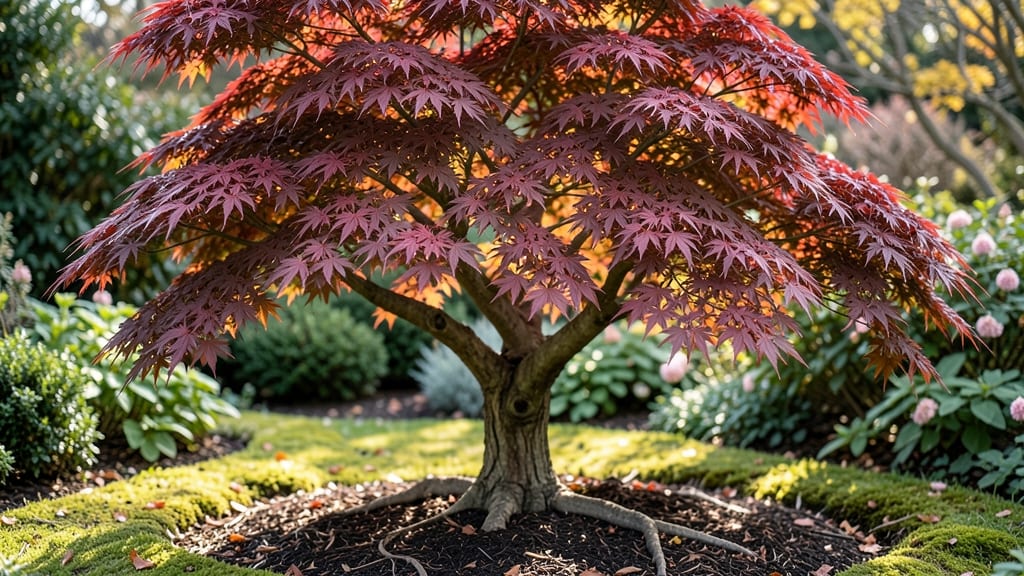
How Tall Japanese Maple Trees Grow: Variety-Specific Heights & Pruning Impact Guide

How To

How Tall Japanese Maple Trees Grow: Variety-Specific Heights & Pruning Impact Guide

How tall a Japanese maple tree grows depends entirely on the variety and care you provide, ranging from 3 feet to over 30 feet. Picture this: You plant a tiny sapling in your yard, dreaming of a delicate, ornamental tree that adds color and elegance.

But without knowing the right variety or how to guide its growth, you might end up with a towering giant or a stunted shrub. The truth is, the height of your Japanese maple tree 🌿 is a mix of genetics, sunlight, soil, and your pruning habits.

Some varieties, like the dwarf 'Shishigashira,' stay compact at 6 feet, while others, such as the standard 'Bloodgood,' can soar to 25 feet or more. Understanding these differences—and how to nurture them—is the key to getting the perfect-sized tree for your space.

In this guide, I’ll break down the height expectations for popular varieties, share expert pruning tips to control growth, and reveal the environmental factors that can make or break your tree’s potential. Let’s get started!

Japanese Maple Tree Height Range
10 ftto30 ft
0 ft 3 ft 6 ft 9 ft 12 ft
🌱 Medium to Medium to Tall Tree

Japanese maple tree height by variety: dwarf to giant size comparison

Japanese maples (Acer palmatum) are famous for their stunning foliage and compact growth habits, but their mature height can vary dramatically depending on the cultivar. If you're planning your garden layout or choosing a tree for a small yard, knowing these height ranges is essential.

Some varieties stay under 6 feet, perfect for containers, while others reach 30 feet, making them small trees for landscapes. Let’s explore the full range so you can pick the perfect fit for your space.

The height of a Japanese maple isn’t just about the variety—it’s also shaped by your pruning habits, soil conditions, and sunlight exposure. For example, a 'Bloodgood' maple left unpruned might top 20 feet, but with regular pruning, it can be kept at 12–15 feet.

Below, we’ve organized the most popular cultivars by size category to help you visualize their potential in your garden.

🌿

Variety Mature Height Growth Rate Ideal Conditions Size Category
'Shishigashira' 3–5 ft Slow Partial shade, acidic soil Dwarf
'Koto no Nishiki' 4–6 ft Slow to moderate Morning sun, well-draining soil Dwarf
'Sango-kaku' 5–8 ft Moderate Partial shade, moist soil Dwarf
'Bloodgood' 15–25 ft Moderate to fast Full sun to partial shade, acidic soil Medium
'Emperor I' 10–15 ft Slow to moderate Partial shade, well-draining soil Medium
'Green Cascade' 6–10 ft Moderate Partial shade, moist soil Medium
'Shishigashira' (weeping) 8–12 ft Slow Partial shade, acidic soil Medium
'Tamukeyama' 20–30 ft Fast Full sun to partial shade, well-draining soil Large
'Atropurpureum' 15–25 ft Mod

How pruning affects Japanese maple tree height: techniques to control growth

Japanese maples are prized for their delicate foliage and graceful form, but their height growth can be easily influenced by pruning techniques. Unlike many trees, these beauties respond well to strategic cuts, letting you shape them into compact shrubs or preserve their natural elegance.

The key lies in understanding heading cuts (trimming back new growth) versus thinning cuts (removing entire branches) and when to apply them.

Pruning at the wrong time or with the wrong method can stunt growth or even invite disease—especially in young trees. For example, aggressive summer pruning sends energy into water sprouts (weak, vertical shoots) rather than sturdy branches.

Instead, timing matters most: late winter or early spring, just before new growth begins, is ideal for shaping without stressing the tree.

⚠️ Avoid These Pruning Pitfalls
  • Over-pruning in one season can shock the tree, leading to stunted growth or dieback.
  • Cutting into old wood (more than 2-3 years old) reduces flowering/foliage potential.
  • Ignoring branch collars when removing limbs invites rot or fungal infections.
  • Pruning in fall delays wound healing and increases disease risk before winter.

Japanese maples heal slowly—always use sterilized tools and make cuts just outside the branch collar to avoid damage.

To encourage compact growth, focus on heading cuts in late spring after leaves emerge. Trim back 1/3 of new shoots to promote bushier habits, especially in dwarf varieties like 'Shishigashira' or 'Little Princess'.

For standard varieties (e.g., 'Bloodgood'), limit heading cuts to 5-10% of the canopy annually to maintain structural integrity.

For selective height control, prioritize thinning cuts—removing entire branches at their base to improve airflow and light penetration. Target crossing branches or those growing inward, as these compete for resources and weaken the tree’s form.

Always remove branches no thicker than 1/3 of the trunk diameter to avoid top-heavy stress.

Pruning young Japanese maples (under 5 years) requires extra care. Focus on structural shaping rather than height reduction, as their growth rate is most rapid in these early years. Remove only suckers (shoots from the base) and water sprouts, which drain energy from the tree’s primary structure.

If your Japanese maple is overgrown or leggy, a rejuvenation prune in late winter may be needed—but space cuts over 2-3 years to avoid shock. For example, reduce the canopy by 20% in year one, then 10% in years two and three.

Pair this with balanced fertilization (10-10-10 NPK) in early spring to support recovery.

★★★★★4.7(9 reviews)
Categories How To