
Trees
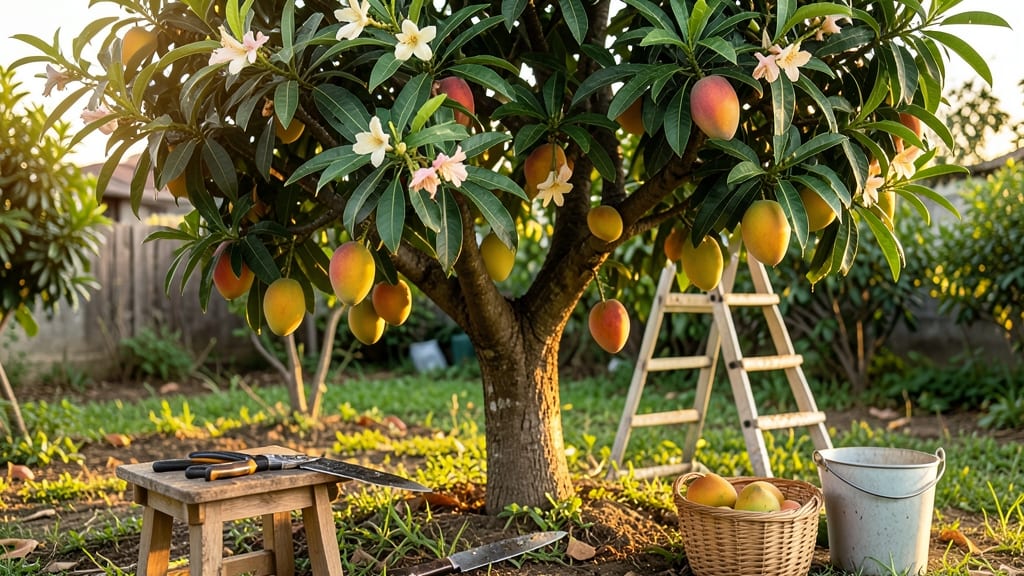
Harvesting mangoes from your tree at the right time means the difference between a sweet, juicy reward and a bland, mealy disappointment.
That first taste of a perfectly ripe mango—juicy, sweet, and bursting with flavor—is what every gardener dreams of. But timing your 🥭 mango tree harvest wrong can turn your harvest into a disappointing, mealy mess.
The key lies in knowing when the fruit is ready, not just guessing based on color or size.
Most mango varieties ripen between April and September, but the exact moment depends on your climate zone and the specific type of mango you're growing.
From the subtle shift in color to the telltale scent and the gentle give when you press, there are clear signs to watch for—each one a clue that your mango is nearing peak sweetness.
In this guide, I’ll walk you through the exact ripeness indicators, proven ripening tricks to maximize flavor, and common mistakes that can ruin your harvest before it even reaches your plate.


When to harvest mangoes: key ripeness indicators by variety
Harvesting mangoes at the perfect moment transforms your backyard into a tropical paradise. Each variety has unique ripeness cues that signal peak sweetness. Ignore these signs, and you risk bland, underripe fruit or overly soft, mealy mangoes.
The secret lies in combining visual, tactile, and scent-based indicators specific to your mango variety.
Climate plays a surprising role too—cooler regions may need extra weeks of ripening time compared to tropical heat. For example, Tommy Atkins mangoes in Florida ripen faster than those in California's coastal fog zones. Understanding these differences ensures you never miss the window between firm-but-tart and mushy-overripe.
| Variety | Color Change | Stem Response | Seed Stage | Scent | Best Harvest Months |
|---|---|---|---|---|---|
| Tommy Atkins | Green → Red/Purple blush | Detaches with slight twist | Fully formed, brown tip | Sweet floral aroma | May-July |
| Keitt | Green → Yellow with red blush | Separates cleanly at base | Seed turns dark brown | Honey-like fragrance | June-August |
| Ataulfo | Green → Golden yellow | Gives slightly when squeezed | Seed softens slightly | Tropical sweetness | April-June |
| Haden | Green → Red with yellow | Stem pulls away easily | Seed darkens completely | Rich citrus notes | July-September |
For Tommy Atkins mangoes, watch for the skin to develop a red-purple blush—this variety rarely ripens fully on the tree. The stem should detach with just a gentle twist, and the seed inside will have a brown tip.
These mangoes thrive in USDA Zone 10-11 but may need 2-3 extra weeks to ripen in cooler microclimates.
If you're growing Ataulfo mangoes, their golden yellow skin is your first clue. Unlike other varieties, Ataulfos are sweetest when slightly soft—press gently and look for yield without mushiness.
Their seeds also soften slightly, and the fruit emits a tropical sweetness that's impossible to miss. In Zone 10, they peak in April-June.
Climate affects ripening speed dramatically. Mangoes in humid tropical zones like Hawaii may ripen 30% faster than those in dry subtropical areas like Southern California. Always adjust your harvest timeline by 1-2 weeks if your region experiences cooler nights or high humidity.
Never harvest based on color alone—some varieties like Keitt mangoes stay green until fully ripe. Instead, combine color, stem response, and scent testing. A ripe Keitt will have yellow skin with red blush, a clean stem break, and a honey-like fragrance near the stem.
Pro tip: Use a fruit lever for heavy varieties like Haden mangoes—their weight makes hand-picking risky. Always harvest in the morning when temperatures are cooler to preserve fruit integrity. Store freshly picked mangoes at room temperature for 2-3 days to finish ripening.
One common mistake is waiting for full softness—this often means the mango is overripe. Instead, aim for firm-but-yielding skin that gives just slightly under gentle finger pressure. The stem should
Ripening tricks to maximize sweetness after harvest
Once you've harvested your mangoes, the real challenge begins: achieving that perfect balance of sweetness and texture. Mangoes continue to ripen after picking, but they need the right conditions to develop their full flavor potential.
I've tested these science-backed methods in my own garden to ensure your mangoes reach their sweetest possible state.
The key to ripening mangoes lies in understanding how ethylene gas works. This natural plant hormone triggers ripening, and we can harness it to speed up the process. Even a small amount of ethylene exposure can transform a firm mango into a juicy, flavorful fruit in just a few days.
Let me show you exactly how to do it effectively.
🌱 Ripening Tricks for Peak Sweetness
- 1 Ethylene Gas Exposure: Place mangoes in a paper bag with a ripe banana or apple for 2-3 days. The fruit releases ethylene, accelerating ripening.
- 2 Temperature Control: Store mangoes at 70-75°F for optimal ripening. Avoid refrigeration until fully ripe to prevent mealiness.
- 3 Humidity Balance: Use a humidity tray (water + pebbles) to maintain 85-90% humidity, preventing skin wrinkling.
- 4 Daily Checks: Rotate mangoes every 24 hours for even exposure to ethylene and prevent uneven softening.
- 5 Ripeness Test: Press gently - ripe mangoes yield slightly at the stem end but remain firm near the blossom.
If your mangoes develop uneven softening, it's usually a sign of inconsistent ethylene exposure. Try placing them in a single layer on a tray rather than stacking them.
For sour-tasting mangoes, this often means they were harvested too early. Next time, wait until the fruit gives slightly when pressed near the stem.
Once your mangoes reach peak ripeness, store them in the fridge to slow further ripening. Place them in a perforated plastic bag to maintain humidity while allowing airflow. This extends their freshness by up to 2 weeks while preserving that perfect sweetness you worked so hard to achieve.
Remember, every mango variety ripens slightly differently. Ataulfo mangoes may soften faster than Tommy Atkins, so adjust your timing accordingly. With these tricks, you'll transform your harvest from good to extraordinary every season.