
Pruning
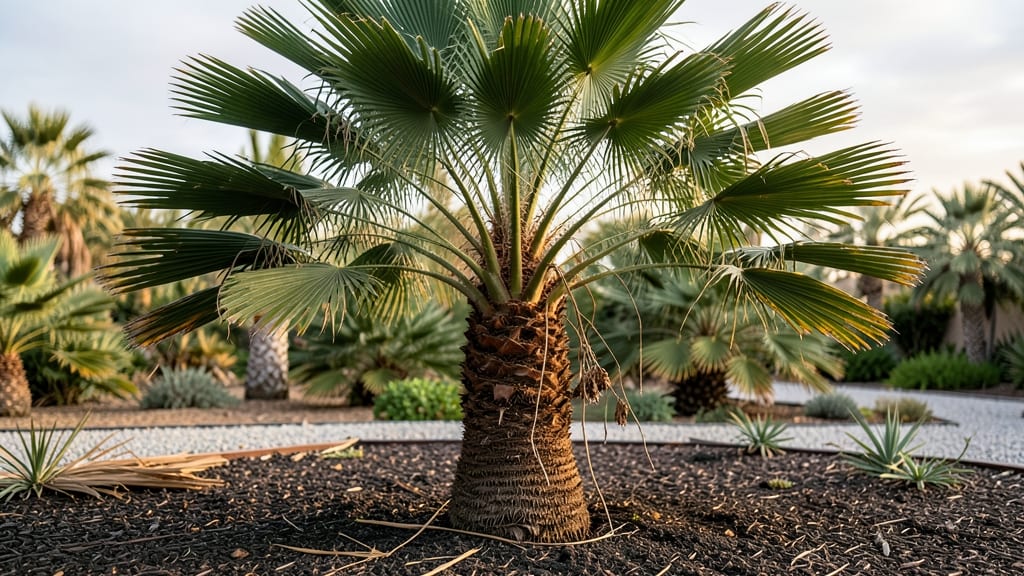
Male palm trees don't exist as separate genders like animals, but many species develop distinct male and female flower clusters that determine their reproductive role. Some palms produce both types on one plant, while others require separate male and female trees for fruit production—like coconut palms, where only female trees bear fruit.
Understanding a palm tree's gender isn't about biological sex but about its reproductive function. 🌿 While most palms don't have strict male/female plants, species like coconut and date palms are dioecious, meaning male and female flowers grow on separate trees.
This affects fruit production—female palms bear coconuts or dates, while males support pollination. Even in monoecious species (like sago palms), individual plants can shift gender over time, making identification tricky until flowering occurs.
For gardeners, recognizing gender helps with planning. If you want fruit, you'll need at least one female palm and a compatible male nearby for pollination.
Some ornamental palms may never show gender traits, so focus instead on overall plant health—watering, sunlight, and proper pruning—to ensure vigorous growth regardless of reproductive role.
💡 In This Article
- How Palm Tree Flowering Patterns Reveal Gender Differences
- Growing Healthy Palm Trees: Gender-Specific Care Tips
How palm tree flowering patterns reveal gender differences
The key to understanding palm tree gender lies in their flowering patterns, which follow two distinct botanical systems. In dioecious species like coconut palms (Cocos nucifera), male and female flowers appear on separate trees entirely.
Male palms produce large, drooping clusters of small, yellowish flowers that release vast amounts of pollen—up to 100 million grains per cluster—while female palms develop solitary flowers that eventually form coconuts. This separation ensures cross-pollination, though some species can self-pollinate if males are absent.
Monoecious palms, like the sago palm (Cycas revoluta), take a different approach by producing both male and female flowers on the same plant, often in separate clusters. The male flowers appear first as bright yellow, feathery catkins that release pollen, while female flowers develop later as cone-like structures.
What's fascinating is that some palms, like the date palm (Phoenix dactylifera), can even shift gender over time—starting as male, then transitioning to female as they mature, a process influenced by environmental factors like temperature and water availability.
Identifying gender in young palms can be challenging since many species don't flower until they're 5-15 years old, depending on the species. For example, coconut palms typically flower at 6-10 years, while date palms may wait until 10-15 years.
Until then, gardeners must rely on visual cues like leaf shape or growth rate—though these aren't foolproof. The coconut palm's fronds, for instance, tend to be slightly broader on female trees, but this difference is subtle and requires experience to spot.
Here's where things get interesting: some palms appear genderless until environmental stressors trigger flowering. The palm's reproductive strategy often depends on survival needs—if a palm isn't producing fruit, it may allocate resources to growth instead.
This is why you might see a palm with no visible flowers for decades before suddenly developing male or female clusters. In dioecious species, this means you could have a "male" palm sitting quietly in your yard for years before revealing its role in pollination.
For gardeners, recognizing these patterns matters most when planning for fruit production. If you're growing coconut palms, you'll need at least one female and one male within 300 feet of each other for successful pollination—the pollen must travel this distance via wind or insects.
The male palm's role isn't just decorative; without it, female palms won't bear fruit. 🌟 Even in monoecious species, understanding these patterns helps predict when a palm will start producing fruit or seeds, which can take years to mature.
One common misconception is that all palms follow the same rules. In reality, the Areca palm (Dypsis lutescens), a popular houseplant, is monoecious but rarely flowers indoors, making gender identification nearly impossible.
Meanwhile, the Washingtonia palm produces separate male and female flowers but is rarely grown for fruit, so its gender often goes unnoticed. The diversity in palm reproduction highlights why these trees are so adaptable—and why their gender isn't always as straightforward as it seems.