
Trees
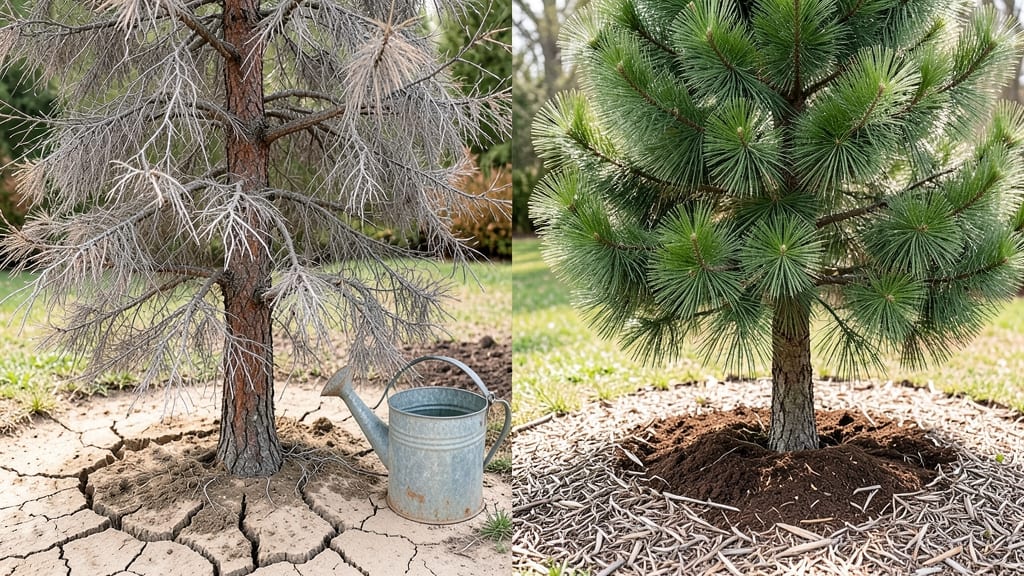
Your pine tree’s drooping branches and crispy needles aren’t just summer flirting—they’re screaming for water. 🌲 Drought stress turns vibrant evergreens into sad, straw-colored shadows, but the good news is revival is possible with the right moves.
I’ve nursed back more thirsty pines than I care to admit, and the secret lies in understanding why they’re struggling before you water like crazy.
Most pines act like they’re made of water—until they’re not. The real culprits? Shallow roots, compacted soil, or thinking a drip here and there counts as hydration. My first mistake was assuming my mature pine only needed water when the ground felt dry.
Wrong. By the time needles browned, the roots were already begging for help. The fix starts with deep watering—2-3 inches every 1-2 weeks—not just a sprinkle that barely reaches the surface.
Here’s the game-changer: mulch and soil prep. A 3-inch layer of wood chips keeps moisture locked in while blocking weeds that steal water. For long-term resilience, mix compost into the top 6 inches of soil to improve drainage and root reach.
Prune dead branches (they’re just sucking energy) and watch as new growth pushes through by next spring. It’s not magic—it’s science backed by sweat and patience.
If your pine is past saving, don’t panic. Some species like Ponderosa or Jack pines handle drought better than others. For future trees, plant in well-draining soil and group pines with similar water needs.
The key? Act fast when you see the first yellow needles. Your tree’s survival depends on it—and so does your yard’s curb appeal.
Root Causes of Pine Tree Drought Stress
Drought stress in pine trees isn’t just about a lack of rain—it’s a complex interplay of environmental, biological, and even human factors that push these resilient evergreens to their limits.
Understanding why drought stress occurs is the first step to saving your struggling pines. Let’s break down the key culprits, from the soil up.
Pine trees lose water through their needles via a process called transpiration, but when temperatures soar, the rate of water loss skyrockets. High heat increases vapor pressure deficit (VPD), meaning the air "demands" more moisture from the tree—even if the soil is dry.
- How it happens: - Sun exposure: Pines in full sun transpire 2-3x faster than shaded trees.
Southern or western exposures are high-risk zones. - Low humidity: Dry air (common in desert or inland climates) accelerates water loss, forcing roots to work overtime. - Heatwaves: Prolonged heat (above 90°F/32°C) can seal stomata (pores on needles), cutting off gas exchange—starving the tree of CO₂ while still losing water.
- Actionable insight: > 💡 Mulch like a pro: A 3-4 inch layer of organic mulch (wood chips, pine straw) retains moisture and cools root zones. Pro tip: Keep mulch 6 inches away from the trunk to prevent rot.
Not all drought stress comes from dry spells—waterlogged soil can be just as deadly. Pines hate "wet feet," but compacted or clay-heavy soils trap moisture, suffocating roots and cutting off oxygen.
- How it happens:
- Clay or hardpan soil: Water pools at the surface, while deeper roots suffocate from lack of aeration.
- Overwatering: While counterintuitive, excessive irrigation (or poor drainage) can drown roots, preventing them from accessing deeper moisture.
- Shallow root systems: Young pines or species like loblolly or shortleaf pines have roots that don’t penetrate deeply, making them vulnerable to surface-level dryness.
- Actionable insight: > 🌡️ Test your soil: Use a soil moisture meter or the "squeeze test" (grab a handful—if it forms a ball, it’s too dense). Amend with sand or compost to improve drainage.
Healthy pine roots need loose, oxygen-rich soil to explore for water. When the root zone is compacted—whether by foot traffic, construction, or heavy machinery—the tree’s ability to seek moisture plummets.
- How it happens:
- Construction or landscaping: Equipment can compress soil to depths of 12+ inches, cutting off root access to deeper water tables.
- Erosion: Sloped or disturbed areas wash away topsoil, exposing roots to sun and wind.
- Sidewalks or patios: Impermeable surfaces create "drought islands," trapping roots in a dry, hot zone.
- Actionable insight: > ✨ Aerate aggressively: Rent a manual or mechanical aerator to create holes 12–18 inches deep in compacted areas. Add mycorrhizal fungi (available as powder) to boost root-water uptake.
Stressed pines are magnets for pests and pathogens. Once drought weakens a tree, insects like pine bark beetles or fungi like armillaria root rot move in, further disrupting water transport.
- How it happens: - Beetle infestations: Drought-stressed pines produce less resin, making them easy targets for bark beetles.
These pests block water-conducting vessels (xylem), causing wilting even if soil is moist. - Fungal infections: Weakened trees succumb to root-rotting fungi, which clog roots and prevent water absorption. - Secondary stress: Herbicide drift or mechanical damage (e.g., lawnmower cuts) compound drought effects.
- Actionable insight: > 🔥 Monitor for early signs: Look for sap oozing, brown needles, or sawdust-like frass (beetle droppings) at the base. Prune damaged limbs to reduce stress and apply neem oil as a preventive spray.
Ironically, well-intentioned gardening practices can worsen drought stress. Over-pruning, aggressive fertilizing, or even planting pines in the wrong microclimate create artificial stress.
- How it happens:
- Excessive pruning: Removing >25% of foliage in one season reduces the tree’s ability to regulate water loss.
- Over-fertilizing: High nitrogen promotes top growth but starves roots of energy to seek water.
- Wrong species placement: Planting drought-sensitive pines (e.g., eastern white pine) in arid regions sets them up for failure.
- Actionable insight: > 🎯 Right plant, right place: Choose native or drought-tolerant species (e.g., Ponderosa pine, Aleppo pine) for your climate. If repotting, prune roots (but not more than 10–15%) to encourage deeper growth.
Drought stress rarely happens in isolation. Heat + compacted soil + pest pressure create a vicious cycle: 1. Heat → ↑ Transpiration → Soil dries faster.
- Compacted soil → Roots can’t reach moisture → Tree wilts.
- Weakened tree → Pests/disease attack → Water transport fails.
Break the cycle by addressing one factor at a time—start with soil, then pests, then heat management. A pine tree’s survival often hinges on which stressor you tackle first.
Revive Your Pine Tree Naturally
Drought-stressed pines can bounce back with the right care—think of it like giving your tree a deep drink and a cozy blanket after a long, dry spell. The key is addressing the root cause (literally!) while making adjustments that prevent future stress.
Below, we’ll break down practical, step-by-step solutions tailored to common triggers, from soil issues to watering mistakes. Plus, we’ll share preventive tips to keep your pine thriving long-term.
Problem: Pines hate soggy roots and parched soil—both can trigger drought stress. Solution:
- Deep Watering (Not Surface Splashes): 🔥 Use a soaker hose or drip irrigation to deliver water 6–12 inches deep, mimicking natural rainfall. Aim for 1–1.5 inches per week during dry spells (check soil moisture with your finger—if the top 2 inches are dry, it’s time to water).
- Pro Tip: 🌡️ Water in the early morning to reduce evaporation and fungal risks.
- Mulch Like a Pro: Spread 3–4 inches of organic mulch (pine bark or wood chips) around the base, but keep it 6 inches away from the trunk to avoid rot. Mulch retains moisture and regulates soil temperature—like a thermos for your tree’s roots!
- Drainage Check: If your pine sits in a low spot where water pools, amend the soil with compost or sand to improve aeration. A quick fix? Create a slight mound around the base to encourage runoff.
Problem: Compacted, nutrient-poor soil strangles roots, making drought recovery harder. Solution:
- Aerate the Soil: Use a garden fork or aerator to poke holes 8–12 inches deep around the tree’s drip line (the edge of its canopy). This lets oxygen and water reach deep roots.
- Pro Tip: ✨ Add gypsum (calcium sulfate) if your soil is clay-heavy—it loosens compacted dirt over time.
- Feed Smart: Pines prefer acidic soil (pH 4.5–6.0). Test your soil with a home kit and amend with sulfur if needed.
For nutrients: - Slow-release fertilizer (like 10-10-10) in early spring—avoid high-nitrogen blends, which burn roots. - Compost tea (brewed from worm castings) for a gentle microbial boost.
Problem: Wind, sun, or competing plants sap energy your pine needs to recover. Solution:
- Shade Cloth for Recovery: If your pine is in full sun, drape 30–50% shade cloth over it for 4–6 weeks to reduce transpiration (water loss). Remove it gradually to avoid shock.
- Prune Strategically: 🔪 Trim only dead or broken branches—never more than 10–15% of the canopy at once. Avoid heavy pruning during drought; it stresses the tree further.
- Pro Tip: 🎯 Prune in late winter/early spring when the tree is dormant.
- Competition Control: Remove weeds, grass, or shrubs within the tree’s drip line. These plants steal moisture and nutrients. A 6-inch-wide mulch ring keeps competitors at bay.
If your pine’s needles are brown, brittle, and falling (not just dormant), try these last-resort fixes: - Root Drench: Mix 1 tbsp of liquid seaweed fertilizer with 1 gallon of water and pour it around the base.
Seaweed contains stress-relief hormones that help roots recover. - Anti-Transpirant Spray: Use a commercial anti-transpirant (like Wilt-Pruf) on needles to reduce water loss while you nurse the tree back to health. - Burlap Wrap (For Young Trees): Wrap the trunk in burlap soaked in water for 24 hours to hydrate the cambium layer (the tree’s growth engine).
Repeat weekly until you see new growth.
Once your pine is on the mend, lock in its recovery with these habits:
- Drip Irrigation System: Install one for automatic, deep watering—set it to run 2–3 times per week in dry climates.
- Rain Barrels: Collect rainwater to avoid chlorine damage from tap water.
- Monitor Soil Moisture: Use a moisture meter or stick your finger in the soil weekly. Consistency is key—pines hate feast-or-famine watering.
- Choose Drought-Tolerant Varieties: If replanting, opt for native pines (like ponderosa or jack pine) or drought-resistant hybrids suited to your climate.
Remember: Pines are tough survivors—with patience and the right care, even severely stressed trees can regrow needles and regain vigor. Start with one or two fixes (like deep watering + mulching), then expand as needed.
Your pine will thank you with lush green needles for years to come! 🌲💚
Frequently asked questions about pine tree drought stress
How can I tell if my pine tree is suffering from drought stress vs. disease?
Drought stress typically shows as uniform browning starting at the needle tips, while disease often creates irregular patches or discoloration. Check the inner needles too—if they’re still green, it’s likely drought. Also, drought-stressed pines may have dry, brittle needles that crumble easily, whereas diseased trees often show sticky resin or fungal growth.
Is it better to water pine trees deeply but infrequently, or lightly every day?
Deep, infrequent watering (1-1.5 inches every 7-10 days) encourages roots to grow deeper, making pines more drought-resistant. Light daily watering keeps roots shallow and makes trees more vulnerable to stress. Use a soaker hose for even moisture penetration.
Can I save a pine tree if the needles are already completely brown?
Not always—but don’t give up! If the inner needles are still green and the bark is firm, the tree may recover with proper care. Focus on deep watering, mulching, and shade protection for 4-6 weeks. If the bark is cracked or the tree is leaning, it’s likely beyond saving.
What's the best mulch to use for drought-prone pine trees?
Use organic mulches like pine bark, wood chips, or pine straw—they retain moisture while allowing airflow. Apply a 3-4 inch layer and keep it 6 inches away from the trunk to prevent rot. Avoid fresh wood chips, as they can draw nitrogen from the soil.
How do I know if my pine tree's roots are too compacted to recover?
Dig a 6-inch deep hole near the drip line—if the soil feels like hard clay or you see roots growing in tight circles, compaction is the issue. Test with a soil moisture meter; if water pools at the surface, roots can’t access deeper moisture. Aerate with a garden fork or consider gypsum for clay soils.