
Fertilization
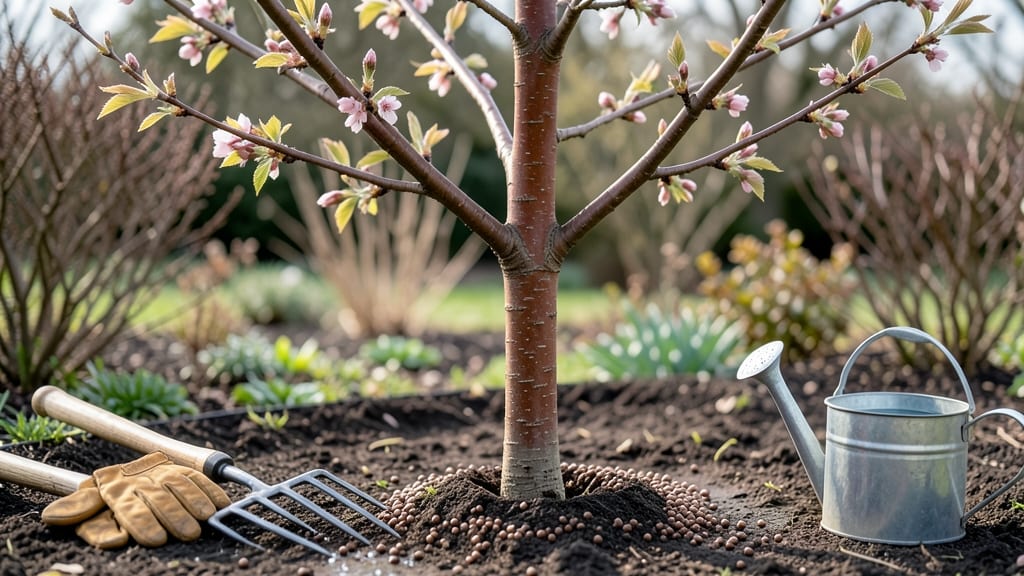
Spring tree fertilization unlocks the season’s best growth—right after bud break but before leaves unfurl—when roots wake up hungry but still delicate. 🌱 I’ve seen oak trees go from struggling to thriving in just one season by timing it this way, using the right mix of nutrients to fuel both roots and foliage without burning them.
The secret isn’t just when but how: organic options like compost or slow-release granules feed steadily, while liquid fertilizers give a quick boost for fruit trees. Shade trees? Go lighter—they’re not as hungry as their fruiting cousins.
And here’s the kicker: overdoing it can stress trees more than help, so we’re talking precision, not generosity. You’ll notice deeper green leaves by summer, stronger branches, and—if you’re growing fruit trees—bigger, sweeter harvests down the line.
The key is matching fertilizer type to your tree’s needs: nitrogen for leafy growth, phosphorus for roots, potassium for resilience. Works for both young saplings and mature giants, across warm southern climates and cooler northern zones. Let’s get those roots fed the right way!
📚 In This Guide
- What you need
- Instructions
- Tips and common mistakes
- Wrapping up and next steps
What you need
- ● Slow-release fertilizer: Choose a balanced, organic fertilizer (e.g., 10-10-10 or 12-12-12 NPK ratio) or a tree-specific formula like 16-4-8. Quantity: 1–2 lbs per 100 sq. ft. of root zone.
- ● Granular fertilizer: Opt for osmocote or composted manure (e.g., cow, chicken, or worm castings). Quantity: 5–10 lbs per tree, depending on size.
- ● Soil pH tester: Ensures your soil is in the ideal range (6.0–7.0 for most trees).
- ● Garden hose with spray nozzle: For even watering post-fertilization.
- ● Gloves and knee pads: Protect your hands and comfort during application.
- ● Measuring scoop or spreader: Ensures precise fertilizer distribution.
- ○ Pruning shears (optional but helpful): For trimming dead branches before fertilizing.
- ● Mulch (wood chips or pine straw): 2–4 inches to retain moisture and regulate soil temperature.
- ● Mycorrhizal fungi: Enhances root absorption (mix into soil before fertilizing).
- ● Organic matter (compost or peat moss): Improves soil structure if your soil is sandy or clay-heavy.
- ● Tree growth stimulator: Liquid or powdered root booster for extra vigor.
- ● Rain gauge or weather app: Avoid fertilizing 24–48 hours before rain to prevent runoff.
Step-by-Step instructions for spring tree fertilization
Here's how I build a nutrient-rich foundation that fuels strong roots and lush foliage all season.
🌱 Step 1: Test Your Soil First
Before adding any fertilizer, grab a small soil sample from 4-6 inches deep around your tree's drip line. A simple home test kit (or lab analysis) reveals what nutrients your tree craves. I always check pH first—most trees thrive between 6.0-7.0, and adjusting this before fertilizing saves money and prevents stress.
If your soil tests low in organic matter, mix in 2-3 inches of compost around the root zone. This improves structure and provides slow-release nutrients. Avoid piling compost directly against the trunk—keep it 3-6 inches away to prevent rot.
💧 Step 2: Apply a Balanced Granular Fertilizer
Spread ½ cup of 10-10-10 granular fertilizer evenly over the soil surface in a 12-inch wide band that extends from the trunk to the drip line. For larger trees, increase to 1 cup. Water the area thoroughly to dissolve the granules and carry nutrients into the root zone.
I like to use a spreader for even distribution—skipping this step creates fertilizer "hot spots" that burn roots. After watering, you'll see the soil darken slightly where the fertilizer dissolved. If you notice white residue, you've overdone it—rinse the area immediately.
☀️ Step 3: Top With Organic Mulch
Spread 2-3 inches of wood chips or shredded bark mulch over the fertilized area, keeping it 3-6 inches away from the trunk. This layer locks in moisture, regulates temperature, and slowly releases nutrients as it breaks down. I always use double the mulch for young trees—their roots are shallow and need extra protection.
Fluff the mulch with a rake to create small air pockets—compacted mulch suffocates roots. Water lightly after applying to help settle the mulch and prevent it from blowing away. You'll notice the soil stays moister longer, especially during dry spells.
⏰ Step 4: Water Deeply and Monitor Growth
Give your tree a deep watering that penetrates 12-18 inches deep. You'll know you've watered enough when the soil feels damp at that depth. Repeat this every 7-10 days during dry periods, focusing on the root zone where you applied fertilizer.
Watch for new growth within 4-6 weeks—healthy trees produce 2-3 inches of new shoots and vibrant foliage. If leaves yellow or brown at the edges, you've over-fertilized. Flush the soil with extra water to leach out excess salts, then reduce fertilizer amounts by half next time.
Tips & tricks for perfect spring tree fertilization
Here's what nobody tells you about maximizing your tree's nutrient uptake this spring.
Soil Testing is Non-Negotiable: That 6.0-7.0 pH range in Step 1 isn't just a suggestion—it's the sweet spot where most trees absorb nutrients most efficiently. I've seen trees with pH outside this range struggle to use even the best fertilizer. If your test shows pH below 6.0, sprinkle pelletized lime (following package rates) before fertilizing to raise it gradually. For pH above 7.0, mix in sulfur or elemental sulfur to lower it. Think of this as the foundation—skipping it is like building a house without a level base.
Fertilizer Application Precision: When you're spreading that ½ cup to 1 cup of 10-10-10 fertilizer in Step 2, less is often more. I've learned the hard way that those "hot spots" from uneven distribution can actually burn tender roots. Use a broadcast spreader for even coverage, and consider splitting the application into two sessions—half now and half in 6-8 weeks. This gradual feeding mimics natural nutrient cycles and prevents shock to the tree's system. The darkening you see after watering? That's good—it means the fertilizer is dissolving properly.
Mulch Layering Technique: The 2-3 inches of mulch in Step 3 isn't just decoration—it's a living ecosystem. I've found that mixing wood chips with leaf mold (if available) creates the perfect balance of moisture retention and nutrient release. For young trees, that double mulch layer is crucial—it mimics the natural forest floor environment they evolved in. Pro tip: Refresh your mulch every 1-2 years as it breaks down, adding a thin layer to maintain that 2-3 inch depth without smothering the tree.
Watering Wisdom: That 12-18 inch deep watering in Step 4 is where most people fail. I use a soil probe to check moisture—if it comes out dry, I water again. The 7-10 day interval is ideal for most mature trees, but newly planted trees often need weekly watering until established. Watch for those 2-3 inches of new shoots as your success metric—it's the tree's way of saying "thank you" for proper care. And if you see yellowing leaves? That's your cue to flush the soil immediately with extra water.
Pro Tips for Spring Tree Fertilization
- Here's what nobody tells you about maximizing your tree's nutrient uptake this spring.
- Soil Testing is Non-Negotiable: That 6.0-7.0 pH range in Step 1 isn't just a suggestion—it's the sweet spot where most trees absorb nutrients most efficiently.
- Fertilizer Application Precision: When you're spreading that ½ cup to 1 cup of 10-10-10 fertilizer in Step 2, less is often more.
Frequently asked questions
Got questions about spring tree fertilization?
You’re not alone! Here are some of the most common queries—and straightforward answers—to help you get it right the first time.
When is the best time to fertilize trees in spring?
The ideal window is early spring (March–April in most regions), just as new leaves emerge but before intense growth begins. This timing ensures nutrients fuel root development and budding, setting the stage for robust summer foliage. Avoid fertilizing after late May—it can encourage tender new growth vulnerable to frost or pests.
Can I use regular lawn fertilizer for my trees?
Not ideal! Lawn fertilizers are high in nitrogen (for green grass) but lack the balanced micronutrients trees need. Opt for tree-specific fertilizers (like slow-release granular or liquid formulas) or organic options (compost, manure, or bone meal) to avoid burning roots or overfeeding. Always check the NPK ratio—trees thrive with a lower nitrogen (e.g., 10-10-10 or 8-3-9).
How do I know if my tree needs fertilization?
Watch for these red flags:
- Yellowing leaves (especially older ones) or sparse foliage.
- Stunted growth or weak branches.
- Soil that’s hard, dry, or lacks organic matter.
- Dieback (dead branches) or poor flowering/fruiting.
What’s the difference between organic and synthetic fertilizers for trees?
| Organic | Synthetic |
|---|---|
| Derived from natural sources (compost, manure, fish emulsion). Improves soil health long-term and feeds beneficial microbes. | Chemically engineered (e.g., urea, ammonium sulfate). Faster results but can harm soil structure if overused. |
| Best for established trees or eco-sensitive areas. | Ideal for quick nutrient boosts (e.g., newly planted trees). |
| Slower release; requires reapplication. | Risk of burning roots if misapplied. |
What should I do if I over-fertilize my tree?
Over-fertilization can cause leaf burn (brown edges), stunted growth, or even root damage. Act fast:
- Flush the soil with water to leach excess nutrients.
- Apply compost or peat moss to absorb surplus salts.
- Avoid fertilizing for 6–8 weeks to let roots recover.
- For severe cases, consult an arborist—they can assess root health.
Wrapping up and next steps
Spring tree fertilization is your secret weapon for lush, thriving trees that stand out in your landscape! 🌿 By layering nutrients like compost, organic fertilizers, and mulch, you’re giving your trees the perfect start to grow strong, resist pests, and bloom beautifully.
Whether you’re a seasoned gardener or just beginning, the key is consistency—so don’t wait until summer to act.
Ready to see the difference? Mark your calendar for early spring (just as buds begin to swell) and get fertilizing! Start small with one tree, observe the results, and expand your efforts. Your trees—and your neighborhood—will thank you for it!