
Pruning
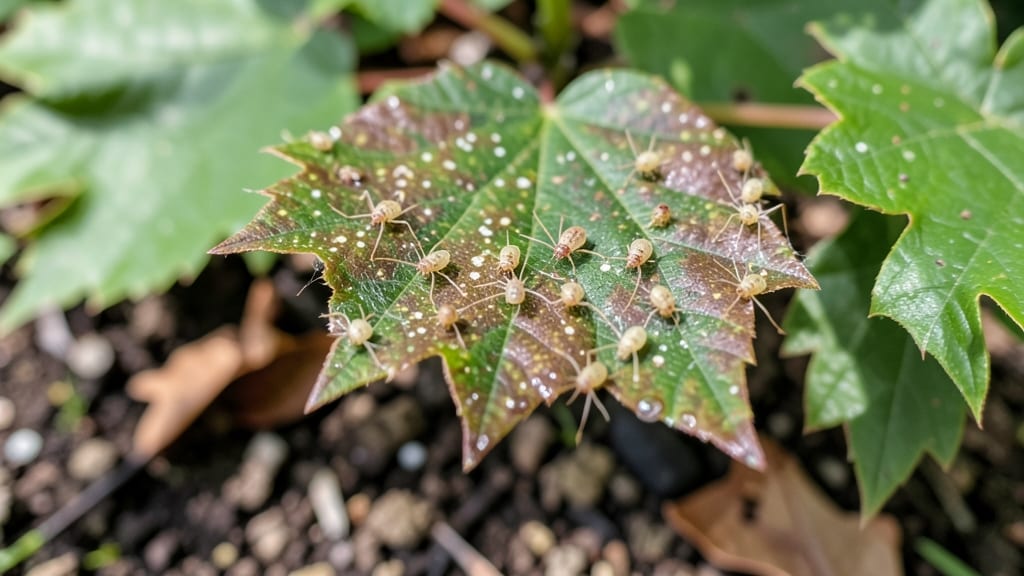
Tree mites on maple trees turn vibrant foliage into speckled brown messes faster than you can say "fall colors." 🌿 I’ve seen healthy maples go from lush green to skeleton leaves in just a few weeks—until I learned these organic spray tricks that actually work.
The first clue is tiny webs between branches, followed by leaves that look like they’ve been dusted with rust. These mites thrive in hot, dry weather, and conventional sprays often kill the good bugs too.
Instead, I’ve had success with neem oil sprays and horticultural oil applied at the right time—late spring or early summer when mites are most active. You’ll see new growth emerge within 2-3 weeks of treatment, with leaves staying green and crisp.
The key is consistency: reapply every 7-10 days until the mites disappear, and keep an eye out for ladybugs—they’re your free pest control. Works for sugar maples, silver maples, and even young saplings. Here’s how to spot them early and stop the damage before it starts.
Root Causes Of Maple Mite Infestations
Understanding why tree mites target maple trees 🌳🐛 starts with recognizing their survival strategies and the weaknesses of your maple species. These tiny pests thrive in specific conditions, often exploiting environmental or tree health factors.
Below, we break down the key reasons mites invade your maple trees—and how to address them.
Maple trees with dense, tangled foliage provide perfect shelter for mites. Their delicate webs and eggs blend seamlessly into the leaves, making them nearly invisible until damage appears. Overcrowding also reduces airflow, creating a humid microclimate that mites adore.
Why it happens:
- Thick foliage traps moisture, slowing leaf drying after rain or dew.
- Lack of pruning allows branches to grow too close, blocking sunlight and stressing the tree.
- Weakened branches from poor pruning practices (e.g., topping) create entry points for pests.
Actionable fix: Regularly thin out crowded branches in early spring or late fall to improve airflow. Focus on removing:
- Crossing branches (rubbing against each other).
- Dead or diseased limbs (entry points for pests).
- Suckers (sprouts at the base that compete for nutrients).
Stressed trees are like open invitations to mites. Drought, poor soil, or nutrient imbalances weaken maples, making them more susceptible to infestations. Mites detect stressed trees through chemical signals and flock to them in search of an easy meal.
Why it happens:
- Drought stress 🌞💧: Maple trees are drought-sensitive. Prolonged dry spells force them to divert energy from defenses to survival, leaving them vulnerable.
- Compacted or poor soil 🏗️🌱: Maple roots struggle in clay-heavy or nutrient-poor soil, reducing their ability to absorb water and minerals.
- Nutrient deficiencies (e.g., low nitrogen or magnesium) 🍃🔬: Yellowing leaves (chlorosis) signal poor health, attracting mites that feed on sap.
Actionable fix:
- Water deeply 1-2 times per week during dry spells (1-2 inches per session).
- Test soil for pH and nutrient levels (ideal range: 6.0–7.5 pH for maples).
- Apply organic mulch (wood chips or compost) to retain moisture and improve soil structure.
- Fertilize in early spring with a balanced organic fertilizer (e.g., 10-10-10) or compost tea.
Mites are part of a delicate food web. When their natural predators—like ladybugs, lacewings, or parasitic wasps—are absent, mite populations explode.
This imbalance often stems from: - Overuse of broad-spectrum pesticides 🚫💊 (which kill beneficial insects along with pests). - Monoculture landscaping 🏡🌳 (planting only maples without diverse flora to support predator habitats). - Urban or suburban environments 🏙️🌿 (where pesticide use is higher, and native predators are scarce).
Why it happens:
- Pesticide residue lingers on leaves, repelling or poisoning predator insects.
- Lack of alternative prey forces predators to seek food elsewhere, leaving mites unchecked.
- Seasonal die-offs of predators (e.g., cold winters) create temporary windows for mite outbreaks.
Actionable fix:
- Encourage biodiversity by planting companion species like:
- Asters (attract lacewings).
- Dill or fennel (draws parasitic wasps).
- Clover (hosts predatory mites).
- Avoid synthetic pesticides—opt for neem oil or horticultural oil sprays (target mites without harming predators).
- Install insect hotels or birdhouses to support predator populations.
Mites thrive in hot, dry conditions 🌡️🔥, which speed up their life cycle. A single female can lay hundreds of eggs in weeks under ideal conditions, leading to rapid infestations.
Maple trees, with their broad leaves, overheat faster in direct sunlight, further stressing the plant and making it more attractive to mites.
Why it happens:
- High temperatures (above 80°F/27°C) increase mite metabolic rates, leading to faster reproduction.
- Low humidity reduces the tree’s ability to transpire efficiently, causing leaf curl—a favorite feeding spot for mites.
- Sun scald on leaves creates weak points where mites can burrow and feed undisturbed.
Actionable fix:
- Provide afternoon shade for young or stressed maples using shade cloth or taller companion plants.
- Mulch heavily (3–4 inches of organic mulch) to regulate soil temperature and retain moisture.
- Water in early morning to allow leaves to dry quickly, reducing humidity-related stress.
Pro Tip: 💡 Monitor your maples weekly during peak mite season (late spring to early fall). Use a hand lens to check for:
- Fine webbing on leaf undersides.
- Speckled or stippled leaves (mite feeding patterns).
- Tiny moving dots (adult mites).
Quick Fixes for Maple Tree Mites
Maple trees can suffer from tree mites—tiny pests that drain sap and weaken foliage—but the good news is, you can tackle them effectively with organic, targeted solutions. Below, we’ve mapped out cause-specific fixes to restore your maple’s health, plus prevention tips to keep mites at bay for good.
Before treating, confirm the issue:
- Yellowing or stippled leaves? Likely spider mites.
- White webbing on branches? Could be maple leaf mites.
- Stunted growth or blackened spots? Possible fungal secondary infection.
Use a hand lens (10x magnification) to spot mites on leaf undersides. If unsure, snap a photo and compare it to online mite guides.
👨🍳 Hose Down & Disrupt Webbing (Early Infestation)
Cause: Light mite activity (no heavy webbing). Fix: 1. Spray leaves thoroughly with a strong water stream (from a hose nozzle) to knock off mites and wash away webbing.
- Repeat every 3–4 days for 2 weeks—miters hate being wet!
- Add a drop of mild dish soap (like Castile soap) to 1 gallon of water for extra slipperiness.
✨ Pro Tip: Do this early morning so leaves dry quickly, preventing fungal growth.
🥘 Neem Oil Spray (Moderate to Heavy Infestation)
Cause: Visible webbing, stippling, or slowed growth. Fix: 1. Mix 2 tbsp neem oil + 1 tsp horticultural oil + 1 tsp mild soap in 1 gallon of water.
- Shake well and spray both sides of leaves (mites hide underneath!).
- Reapply every 5–7 days for 3–4 weeks.
- Best time: Early evening to avoid sunburning leaves.
💡 Why It Works: Neem oil disrupts mites’ life cycle and acts as a repellent.
🔪 Beneficial Predators (Long-Term Control)
Cause: Recurring mite issues (preventative). Fix:
- Release predatory mites (e.g., Phytoseiulus persimilis) or lacewings (sold at garden centers).
- Plant companion flowers like marigolds or dill near the tree to attract natural predators.
- Avoid pesticides—they kill beneficial insects too!
🌡️ Best For: Organic gardeners who want a sustainable, chemical-free solution.
⏰ Prune & Clean Infested Branches
Cause: Severe damage or fungal spread. Fix: 1. Trim heavily infested branches (use sterilized pruners) and dispose of clippings in a sealed bag.
- Rake up fallen leaves—mites overwinter in debris!
- Seal pruning cuts with pruning sealant to prevent secondary infections.
⚠️ Warning: Don’t prune during peak mite season (late summer)—wait until fall or early spring.
- Water deeply & regularly—mites thrive in dry, stressed trees.
- Mulch around the base (2–3 inches) to retain moisture.
- Encourage bird activity—birds eat mites!
Install a birdhouse or feeder nearby. 4. Inspect trees weekly in spring and fall (peak mite seasons). 5. Avoid over-fertilizing—too much nitrogen attracts pests.
Final Note: Consistency is key! Mites reproduce fast, so stick to your treatment schedule until the problem clears. With these methods, your maple should bounce back stronger than ever—and mite-free! 🌿
Frequently asked questions
How do I tell if my maple tree has mites vs. another pest?
Look for tiny webs between branches and speckled leaves—classic mite signs. Spider mites leave stippled patterns, while maple leaf mites create white webbing on branches. Check leaf undersides with a hand lens for moving dots (adult mites). Other pests like aphids leave sticky residue or curled leaves.
When is the best time to treat tree mites on maples?
Act fast in late spring to early summer when mites are most active. Treatments like neem oil work best at 60-80°F temperatures. Avoid spraying when flowers are present (to protect pollinators) or during extreme heat. For severe cases, repeat every 7-10 days until mites disappear.
Will tree mites kill my maple tree?
Mites rarely kill mature maples but can cause severe stress if left untreated. Young saplings may suffer permanent damage. The real danger comes from secondary infections (like fungi) that exploit mite-weakened leaves. Act within 2-3 weeks of noticing symptoms to prevent long-term harm.
Can I use store-bought pesticides safely on maples?
Most chemical pesticides harm beneficial insects and may leave residues. For organic safety, stick to neem oil or horticultural oil sprays. If using synthetic pesticides, choose miticide-specific products and apply early morning when bees are less active. Always follow label instructions precisely.
How long does it take to see results from treatments?
With consistent care, you'll notice improvement in 2-3 weeks. New growth should appear green and healthy within this time. For severe infestations, it may take 4-6 weeks of regular treatments. Monitor weekly and reapply if mites persist—patience is key!