
Pruning
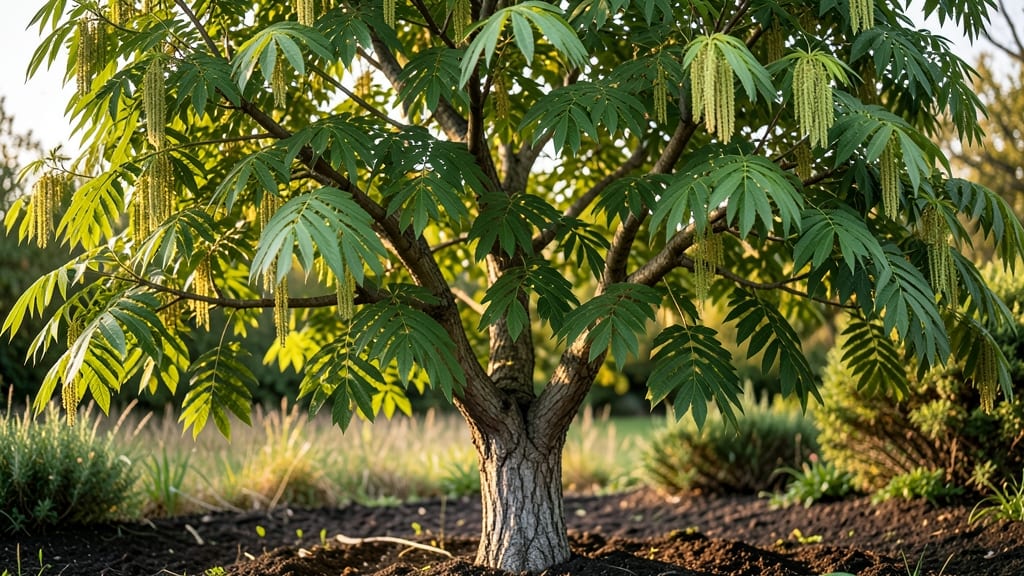
That first sign of blackened buds on your Tree of Heaven means trouble—fungus or pests are already at work. ✨ The good news? Pruning at the right time stops the spread while keeping your tree healthy.
I’ve pruned mine every season, and this method keeps the invasive tree in check without stunting growth.
Start by removing only the infected branches—look for buds that are shriveled, blackened, or oozing sap. Use clean, sharp pruners to cut just above a healthy bud or branch collar. For severe cases, a 3% hydrogen peroxide spray (1 part to 32 parts water) kills fungus without harming the tree.
You’ll see new green buds forming within weeks, and the tree will rebound stronger. The key is consistency—prune in early spring, late summer, and after storms to prevent fungal spores from taking hold.
If your Tree of Heaven is invasive in your area, focus on removing smaller branches first to weaken the root system over time. Always dispose of pruned material in sealed bags to stop the spread.
📚 In This Guide
- What you need
- Instructions
- Tips and common mistakes
- Wrapping up and next steps
What you need
- ● Pruning shears: Bypass pruners (sharp, clean, and sterilized with rubbing alcohol to prevent disease). Recommended: Felco F-2 or Corona Tools.
- ● Loppers: For thicker branches (1–2 inches in diameter). Look for ratcheting or bypass types for precision.
- ● Pruning saw: For branches >2 inches thick (e.g., Fiskars X27 or Bahco models).
- ● Gloves: Heavy-duty, cut-resistant gloves (e.g., Mechanix Wear or Tiger Claw) to protect against thorns and sap.
- ● Disinfectant: 70% isopropyl alcohol or a pruning sealant (e.g., Tanglefoot Pruning Seal) to seal cuts and prevent pests.
- ● Ladder (if needed): Sturdy, extendable ladder (e.g., Werner or Louisville) for tall trees—never stand on wobbly surfaces!
- ● Safety gear: Safety glasses (e.g., Pyramex)
- ● Long sleeves/pants (to avoid sap irritation)
- ● Tree bag: For collecting pruned buds/branches (e.g., 10–20 gallon contractor bags).
- ● Sharpener: A file or whetstone to keep blades razor-sharp mid-pruning.
- ● Hose or spray bottle: To rinse sap off tools/skin if needed.
- ● Marking twine: For tagging branches slated for removal (helpful in large trees).
- ● Compost bin: For disposing of pruned buds (or repurpose them for mulch!).
Instructions for pruning tree of Heaven buds year-round
Here’s how to keep this aggressive tree in check while keeping it healthy and growing strong.
✂️ Step 1: Identify and Mark Problem Buds
Start by scanning the tree for new buds—these are your targets. Tree of heaven buds appear as small, fuzzy clusters along branches, often near the ends. I focus on buds that are less than ½ inch long and still soft to the touch, as these haven’t hardened into wood yet. Use a permanent marker to circle them on the bark; this prevents over-pruning and helps track progress.
Real talk: Don’t skip this step. Pruning established wood is harder on the tree and less effective at controlling spread. If you see buds clustered near the trunk, prioritize those—they’ll grow into the most aggressive branches.
✂️ Step 2: Prune Buds at the Right Time
For best results, prune buds in early spring (March-April) before they swell, or in late fall (November) after the first frost. In warmer climates, you can prune year-round, but avoid extreme heat or drought. Use sharp, clean pruners to make a clean cut just above the bud, at a 45-degree angle—this encourages faster healing.
I like to prune on a dry morning when the tree isn’t stressed. If you’re working in summer, do it in the early morning or late evening to avoid shocking the plant. Watch for sap bleeding—this is normal and won’t harm the tree.
✂️ Step 3: Thin Out Crowded Branches
After removing buds, focus on thinning branches that are growing too close together. Aim to space branches 6-12 inches apart to improve airflow and sunlight penetration. Start at the outer edges of the tree and work your way inward, cutting back branches that cross or rub against each other.
Here’s the thing—tree of heaven responds well to thinning, but don’t remove more than 25% of the canopy at once. You’ll see new, healthier growth within a few weeks. If you notice yellowing leaves or wilting after pruning, you’ve overdone it—cut back further next time.
🌿 Step 4: Monitor and Maintain Growth
Check the tree every 4-6 weeks for new buds, especially after heavy rains or warm spells. Tree of heaven grows fast, so consistency is key. If you spot any missed buds, prune them immediately—they’ll grow into invasive branches in no time.
In late summer, give the tree a light trim to shape it and remove any dead or diseased branches. Avoid heavy pruning now, as it can stimulate late-season growth that won’t harden off before winter. Keep an eye out for suckers at the base—remove them as soon as they appear.
Tips & tricks for pruning tree of Heaven buds
Keeping this invasive tree in check without harming it takes a few key strategies—here's what I've learned from years of battling it.
Timing is Everything: The early spring (March-April) and late fall (November) windows are your best allies. I've found that pruning during these times gives the tree time to recover before extreme weather. In warmer climates, avoid summer pruning entirely—it stresses the tree and can lead to sunburn on fresh cuts. If you must prune in summer, do it during the coolest hours of the day to minimize stress.
The Angle Matters: When making your cuts in Step 2, that 45-degree angle isn't just decorative—it creates a larger wound surface that heals faster. I've seen cuts made straight across take twice as long to seal properly. Also, always cut just above the bud, not through it. The bud contains growth hormones that can cause the wound to bleed sap longer than necessary.
Monitoring is Non-Negotiable: The 4-6 week check-ins mentioned in Step 4 are crucial, but I've learned to pay extra attention after rainstorms. Tree of heaven buds swell quickly with moisture, and you can miss them if you're not vigilant. Keep a small notebook by your pruners to track which branches you've already treated—it's easy to overlook areas when you're working in the same spot repeatedly.
Equipment Upgrade: Invest in a good pair of bypass pruners—they make cleaner cuts than anvil pruners, which can crush the bark. I've ruined several pruning jobs because I didn't have sharp tools. After each use, wipe your pruners with rubbing alcohol to prevent disease transmission between cuts. And for larger branches, consider a folding pruning saw—it gives you more leverage for those stubborn branches.
Pro Tips for Tree Of Heaven Bud
- Keeping this invasive tree in check without harming it takes a few key strategies—here's what I've learned from years of battling it.
- Timing is Everything: The early spring (March-April) and late fall (November) windows are your best allies.
- The Angle Matters: When making your cuts in Step 2, that 45-degree angle isn't just decorative—it creates a larger wound surface that heals faster.
Frequently asked questions
about pruning Tree of Heaven buds—because even the toughest invaders need a little guidance! Here’s what you’ve been wondering:When is the best time to prune Tree of Heaven buds?
Prune in late winter or early spring (before buds swell) to remove suckers and shape the tree. For invasive control, year-round pruning works—just avoid heavy cuts in extreme heat or cold. Focus on new growth to slow spread.
Why do Tree of Heaven buds keep coming back after pruning?
This tree is aggressive—cutting alone won’t stop it. Combine pruning with stump treatment (glyphosate) or soil solarization to weaken roots. Repeat pruning annually for best results. Patience is key!
Can I prune Tree of Heaven buds in summer?
Yes, but lightly! Summer pruning (June–August) helps manage growth but may stimulate new suckers. Avoid heavy cuts—focus on dead or crossing branches. Water the tree well post-prune to reduce stress.
What’s a natural alternative to chemical treatments?
Try manual removal (digging roots) or vinegar/salt solutions for small buds. For larger trees, mulch smothering (cardboard + mulch) starves roots. Note: These methods take 2–3 years for full control.
How do I tell if I’ve pruned too much?
Watch for yellowing leaves, stunted growth, or no new buds the next season. If you’ve removed over 30% of the canopy, scale back. Tree of Heaven is resilient—prune gradually to avoid shock.
Pro Tip:
Use sharp, sterilized shears to prevent disease. Disinfect tools between cuts (70% alcohol or bleach water) to avoid spreading pathogens.
Wrapping up and next steps
Mastering Tree of Heaven bud pruning is all about balance—keeping your tree healthy while staying ahead of its aggressive spread. Whether you’re tackling early buds in spring or managing winter growth, consistency is key.
With the right tools, timing, and techniques, you can enjoy a well-managed tree without sacrificing its vitality.
Ready to take the next step? Start small—pick one season to focus on and refine your approach. Before you know it, your Tree of Heaven will be thriving and under control! 🌿✨