
Plants
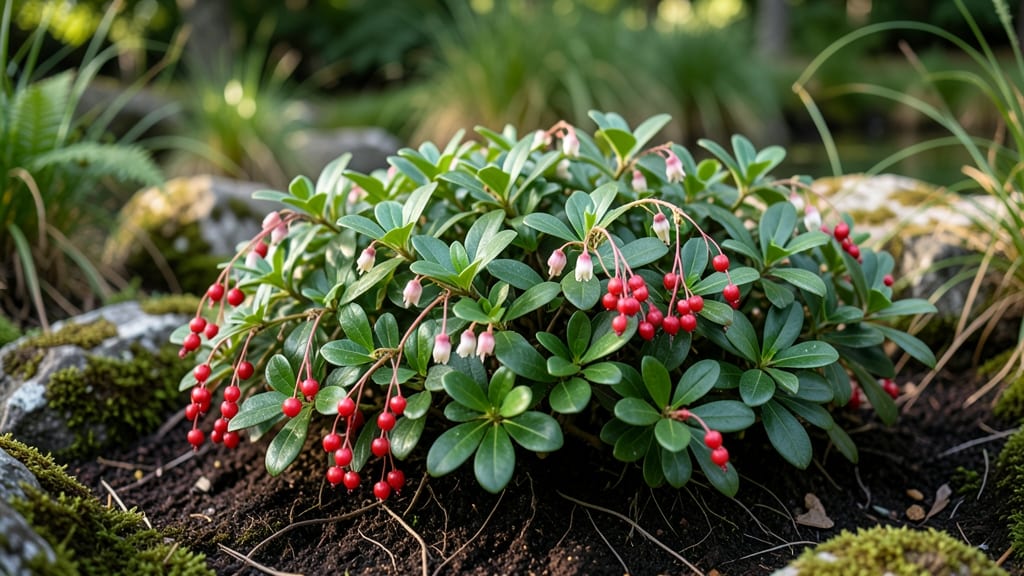
A cranberry tree looks like a small, rounded evergreen shrub with glossy, dark green leaves, reddish-brown bark, and clusters of bright red berries in fall. Its branches spread low to the ground, resembling a bush rather than a true tree.
A cranberry tree's appearance changes dramatically with the seasons, making it easy to identify once you know what to look for. 🌿 The leaves stay evergreen year-round, but they turn slightly red in winter, adding a pop of color against the reddish-brown bark.
What sets it apart from other shrubs is its low-growing, sprawling habit—unlike traditional trees, it stays close to the ground, often forming dense mats. These plants thrive in wet, acidic soils, which is why you'll often spot them in bogs or near water sources.
The bright red berries that appear in late summer through fall are the plant's most recognizable feature, but they're not always present. Young cranberry trees may take a few years to produce fruit, so don't be discouraged if you spot a plant with leaves and bark but no berries.
The berries themselves are actually aggregates of tiny individual fruits fused together, which is why they look so plump and juicy when ripe.
💡 In This Article
- Identifying Cranberry Tree Leaves, Bark, and Growth Habit
- Cranberry Tree vs. Bog Plant: Key Differences for Gardeners
Identifying cranberry tree leaves, bark, and growth habit
The cranberry tree's leaves are its first clue—small, oval-shaped, and 1-2 inches long with a smooth, leathery texture that feels almost waxy to the touch.
Unlike blueberry leaves, which are slightly serrated, cranberry leaves have a smooth, entire edge and a shiny, dark green upper surface that reflects light. 🌿 The undersides are lighter, almost pale green, and slightly fuzzy, which helps distinguish them from lingonberry leaves that appear more matte and dull.
These leaves stay green year-round, though they develop a subtle reddish tint in winter, especially in colder climates.
The bark is another key identifier—young cranberry trees have smooth, reddish-brown bark that darkens and develops small ridges as the plant matures. This bark contrasts sharply with the bright green foliage, creating a striking visual effect.
The growth habit sets it apart from traditional trees: cranberry plants spread horizontally, often forming dense mats just 1-3 feet above the ground. This low, sprawling structure is why they're sometimes mistaken for ground covers rather than shrubs.
The branches are flexible and arching, which helps them withstand heavy fruit loads without breaking.
Seasonal changes are critical for identification. In spring, new growth emerges with a soft pinkish hue before turning green, while fall brings the signature bright red berries that hang in clusters.
These berries aren't true fruits but aggregates of tiny drupelets, each containing a single seed. 🍒 Unlike blueberries, which grow individually on stems, cranberries cluster densely along the branches, creating a vibrant red canopy that's hard to miss.
The berries also float in water—a useful trick for distinguishing them from lookalikes like black huckleberries.
One common point of confusion is mistaking cranberry plants for blueberries or lingonberries. Blueberry leaves are slightly larger (1-2.5 inches) and have a more pronounced vein pattern, while lingonberry leaves are narrower and more elongated, often with a slightly curled edge.
The bark of blueberries tends to be grayer and more scaly, whereas cranberry bark remains smoother and reddish-brown. The berry size is another clue: cranberries are 1/2 to 3/4 inch in diameter, while blueberries are typically 1/4 to 1/2 inch.
For gardeners, understanding these details helps with proper care. Cranberry plants thrive in acidic, peat-based soils with high moisture levels, often growing in bogs or near wetlands. Their shallow root system means they're sensitive to drought, which is why they spread horizontally to maximize water absorption.
The leaves' waxy coating also helps reduce water loss, a perfect adaptation for their waterlogged habitats. 💧 This low-growing habit isn't just for show—it protects the plant from harsh winds and allows it to flourish in environments where taller plants would struggle.
If you're trying to identify a cranberry plant in the wild, focus on these three features: leathery, smooth-edged leaves, reddish-brown bark, and low-growing, sprawling branches. The berries are the easiest giveaway in fall, but even without them, the leaf and bark characteristics make cranberry trees stand out.
For a side-by-side comparison, blueberries grow more upright with darker, scaly bark, while lingonberries have smaller, more pointed leaves and a woody, vine-like growth habit.