
Watering
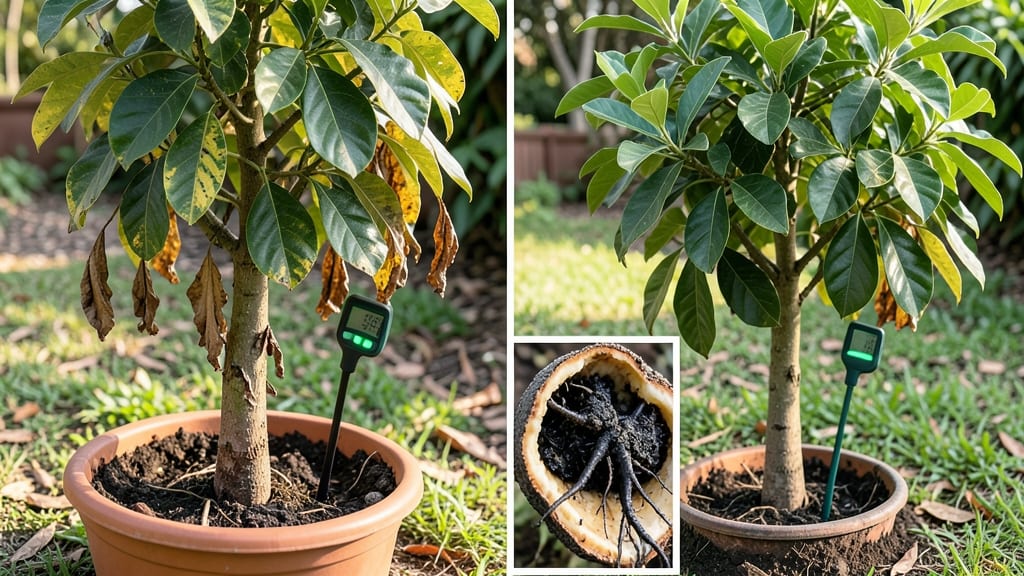
What does an overwatered avocado tree look like? That sad droop and yellowing leaves aren’t just a phase—they’re screaming for help. 🌱 Overwatering turns lush green canopies into soggy messes, and those telltale signs (like mushy stems or moldy soil) mean your tree’s roots are drowning. I’ve nursed back more than a few of these heavy-handed watering disasters, and the fix starts with letting the soil dry out completely between drinks.
Think of avocado trees like desert survivors—they’d rather go thirsty than swim. When you poke your finger 2 inches deep, the soil should feel dry, not damp. If it’s still wet after a week, you’ve got a drainage problem (and maybe a fungus party starting).
The good news? Avocados bounce back fast once you cut back—just don’t drown them again.
What you’ll end up with is a tree that stops wilting midday and starts regrowing those glossy, dark-green leaves you love. The roots will firm up, the canopy will perk, and you’ll finally understand why “less is more” works for these tropical divas.
Trust me, your tree’s survival depends on this.
This works for both backyard trees and potted avocados—just adjust your watering schedule to match your pot size. The key is patience: recovery takes 4-6 weeks, but the payoff is a tree that thrives instead of thrashes. Let’s get those roots breathing again.
Root Causes Of Overwatering
Overwatering your avocado tree isn’t just a matter of giving it too much love—it’s a complex interplay of soil, climate, and plant biology. Understanding the why behind soggy roots helps you fix the problem before it’s too late.
Let’s break down the science behind why your avocado tree might be drowning in its own moisture.
Avocado trees thrive in well-draining soil, but if your soil is heavy, compacted, or lacks organic matter, water pools around the roots instead of draining away. Here’s why this happens:
- Clay-heavy soil: Clay particles bind tightly, creating a dense matrix that traps water. Even after watering, excess moisture lingers, suffocating roots.
- Lack of organic matter: Soil rich in compost or mulch absorbs and releases water efficiently. Without it, water sits stagnant near the roots.
- Improper planting depth: If the root flare (where the roots meet the trunk) is buried too deep, water pools around the base, preventing airflow and encouraging rot.
Pro Tip: 💡 Test your soil’s drainage by digging a 6-inch hole, filling it with water, and timing how long it takes to drain. If it takes more than 30 minutes, amend with perlite, sand, or compost.
Avocado trees are drought-tolerant once established, but well-meaning gardeners often overwater due to misconceptions. Here’s how human error leads to soggy soil:
- Watering on a schedule: Many assume avocado trees need daily water, but they prefer deep, infrequent watering. Frequent shallow watering keeps the topsoil wet without hydrating the roots.
- Ignoring weather conditions: Rainy seasons or humid climates reduce the need for supplemental water. Yet, gardeners often water regardless, doubling the moisture.
- Using the wrong tools: Hoses, sprinklers, or overhead watering can lead to runoff and uneven saturation. Drip irrigation or soaker hoses deliver water directly to the root zone.
Pro Tip: ✨ Stick your finger 2 inches into the soil—if it’s damp, wait. If it’s dry, water deeply until it runs out the drainage holes (for potted trees).
Your avocado tree’s surroundings play a huge role in how it handles water. These external factors can amplify overwatering risks:
- High humidity: Moist air slows evaporation, keeping soil wet longer. In tropical or coastal climates, roots suffocate faster.
- Shady or sheltered spots: Lack of sunlight reduces transpiration (the plant’s natural water release process). Without sunlight, the tree holds onto moisture instead of using it.
- Container limitations: Potted avocado trees dry out faster than in-ground plants, but their roots are confined. Without adequate drainage holes, water circulates in a small, stagnant loop.
Pro Tip: 🌡️ Move potted trees to a sunny, breezy spot to speed up evaporation. If outdoors, ensure they’re in a location with partial shade and airflow.
When roots sit in waterlogged soil, they become prime targets for pathogens. These invisible invaders accelerate decline:
- Root rot (Phytophthora): This water-loving fungus thrives in saturated soil, blocking nutrient uptake and causing roots to decay.
- Bacterial soft rot (Erwinia): Bacteria enter through wounded roots, turning them mushy and black. This spreads quickly in wet conditions.
- Powdery mildew (on leaves): While not a root issue, overwatering stresses the tree, making it susceptible to fungal leaf infections.
Pro Tip: 🔥 If you suspect root rot, stop watering immediately and repot in fresh, sterile soil. Add fungicide if needed.
Now that you know the why, the next step is diagnosing your tree’s symptoms and taking corrective action. But first—let’s talk about how to fix what’s already been done.
Revive Your Avocado Tree Now
Overwatering can feel like a slow-motion disaster for your avocado tree, but the good news? It’s fixable—even if your tree looks like it’s throwing in the towel. The key is acting fast, adjusting your watering habits, and giving your tree the right conditions to bounce back.
Below, we’ll break down cause-specific solutions to rescue your avocado, plus prevention tips to keep it thriving long-term.
If your avocado’s leaves are turning yellow, mushy, or falling off, the roots are likely drowning in excess moisture. Here’s how to turn things around:
🔥 Step 1: Stop Watering Immediately
- No more H₂O until the soil dries out. Overwatering is the root (pun intended) of the problem, so cut it off cold turkey.
- Test the soil: Stick your finger 2–3 inches deep.
If it’s damp, wait. If it’s soggy, your tree needs a break.
🍳 Step 2: Improve Drainage Fast Avocados hate wet feet.
If your pot lacks drainage holes or your in-ground tree sits in compacted soil, fix it ASAP: - Potted trees? Repot into a container with drainage holes and fresh, well-draining cactus/succulent mix (or amend existing soil with perlite/pumice). - In-ground trees? Dig around the base to loosen compacted soil and mix in compost or coarse sand to improve airflow.
👨🍳 Step 3: Prune Damaged Foliage
- Snip off yellow, brown, or mushy leaves with clean pruners. This helps the tree focus energy on healthy growth.
- Don’t panic if it looks sparse—new leaves will return once the roots recover!
⏰ Step 4: Wait and Monitor
- Give it 1–2 weeks before watering again. Resume only when the top 2 inches of soil are dry.
- Signs of progress: New green leaves, firmer stems, and less leaf drop.
A wilting or sagging avocado tree often means the roots are suffocating. Here’s how to stiffen those branches back up:
🌡️ Step 1: Check for Root Rot
- Gently dig around the base (1–2 inches deep). If roots smell rotten or look black/mushy, root rot is likely.
- Solution: Trim away mushy, dark roots with sterilized shears, then replant in fresh, dry soil.
💡 Step 2: Adjust Watering for Recovery
- Water deeply but infrequently. Instead of daily light sprinkles, give your tree a slow, thorough drink every 10–14 days (adjust based on climate).
- Morning watering is best—it allows excess moisture to evaporate during the day.
🎯 Step 3: Support the Tree Temporarily
- If branches are severely droopy, stake them lightly to prevent breakage while they regain strength.
- Avoid over-fertilizing—weak roots can’t handle extra nutrients yet.
✨ Step 4: Boost Soil Aeration
- Top-dress with coarse sand or orchid bark to prevent future compaction.
- Mulch lightly (1–2 inches) with straw or wood chips to retain just enough moisture without smothering roots.
If your avocado is collapsing, oozing sap, or covered in mold, it’s in critical condition. Act now:
- Remove the tree from its current pot/location and inspect roots.
- Trim all black/mushy roots and dust cuts with cinnamon (natural antifungal).
- Repot in sterile, fast-draining soil (avoid garden soil—it retains too much moisture).
- Move to a shady, dry spot for 2–3 weeks while it recovers.
Once your tree is back on track, lock in these habits to avoid future overwatering disasters: - ✅ Water only when the soil is dry—avocados prefer drought-like conditions over soggy roots. - ✅ Use the "finger test" before watering (stick your finger 2 inches deep). - ✅ Choose the right pot—terracotta or fabric pots dry out faster than plastic. - ✅ Avoid saucers under pots—they trap water.
Elevate pots on feet or use a tray with drainage holes. - ✅ Fertilize lightly—over-fertilizing stresses roots, making them more susceptible to rot. - ✅ Plant in well-draining soil—mix 60% potting soil, 30% perlite, and 10% compost.
Stick to this simple guideline to keep your tree hydrated without drowning it:
- Potted avocados: Water every 7–10 days (less in winter).
- In-ground avocados: Water every 10–14 days (or when leaves start curling slightly).
- Always water at the base—never overhead (wet leaves = fungus risk).
Your avocado tree can recover—just give it time, patience, and the right care. With these fixes, you’ll see new growth in 4–6 weeks, and your tree will be stronger than ever. 🚀🌿
Frequently asked questions
What are the first signs my avocado tree is overwatered?
Look for yellowing leaves that start at the bottom, drooping branches even when soil is wet, and mushy stems when pressed. The soil may smell sour or have a grayish mold—these are red flags that roots are suffocating.
Can an overwatered avocado tree recover?
With proper care, most trees bounce back in 4-6 weeks. Stop watering immediately, improve drainage, and prune damaged leaves. The key is patience—let the soil dry completely before watering again.
Why do avocado leaves turn yellow when overwatered?
Yellow leaves signal root stress from excess moisture. Overwatering blocks oxygen to roots, preventing nutrient uptake. The tree sheds leaves to conserve energy while roots recover. Think of it as a survival mechanism!
How often should I water my avocado tree to avoid overwatering?
For potted trees, water every 7-10 days (less in winter). For in-ground trees, wait until the top 2 inches of soil are dry. Always water deeply at the base—never overhead—to prevent fungal issues.
What's the difference between overwatered and underwatered avocado leaves?
Overwatered leaves are yellow, mushy, and droopy with possible mold. Underwatered leaves are dry, crispy, and curled at the edges. The soil test (finger check) is your best diagnostic tool!