
Trees
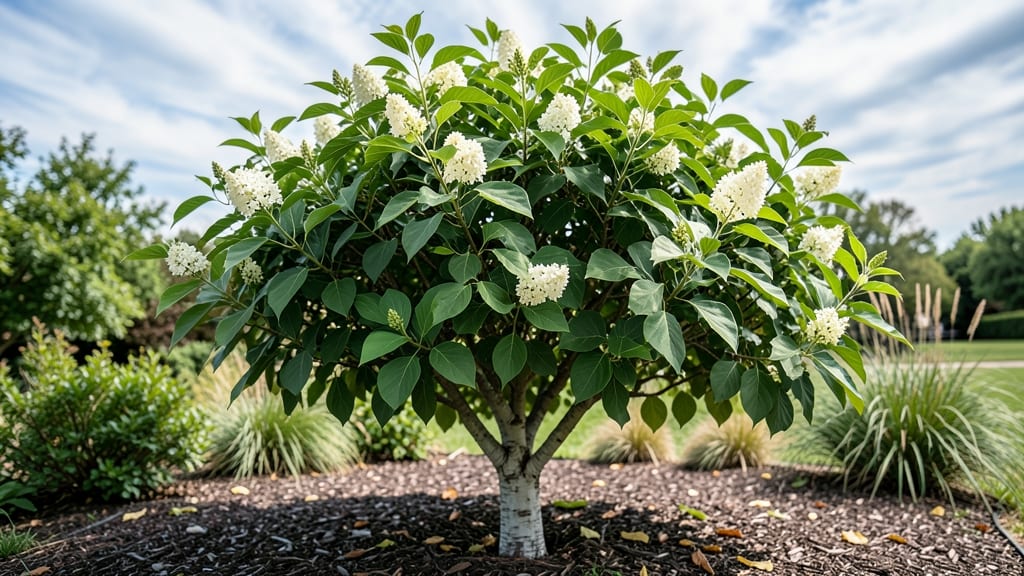
Your lilac tree’s white leaves aren’t just a cosmetic issue—they’re a cry for help. 🌿 Whether it’s powdery mildew, nutrient hunger, or pest pressure, the symptoms reveal exactly what’s wrong. I’ve diagnosed and fixed this exact problem in my own yard, and the solutions are simpler than you’d think.
First, check the leaf texture: fuzzy white coating? That’s powdery mildew. Yellowing with white spots? Likely a pest like aphids or spider mites. Nutrient deficiencies show up as pale, thin leaves—especially if new growth looks weak.
The good news? Each problem has a targeted fix, from organic sprays to soil boosters that work fast.
Once you identify the cause, treatment is straightforward. For mildew, a mix of baking soda and water stops it in its tracks. Pest infestations respond to neem oil or insecticidal soap.
And if it’s a nutrient issue, a balanced fertilizer or compost tea revives the tree in weeks. Prevention is even easier—just improve airflow and keep the soil healthy.
Don’t let white leaves become a permanent problem. With the right approach, your lilac will bounce back stronger than ever, and you’ll learn how to keep it thriving year after year. Let’s get those leaves back to their vibrant green!
Understanding Leaf Discoloration
White or pale leaves on your lilac tree (Syringa vulgaris) aren’t always a sign of distress—they can also be a natural or seasonal response. However, if the color shift is unexpected, it’s worth investigating.
Below, we break down the most common causes of white or pale lilac leaves, backed by science, so you can diagnose the issue and take action.
Lilac trees thrive on balance, and when their diet lacks key nutrients, leaves can turn a ghostly white or yellowish-green. The most common culprits are:
- ❌ Iron (Chlorosis) Lilacs prefer slightly acidic to neutral soil (pH 6.0–7.0).
In alkaline soils (pH >7.0), iron becomes unavailable, leading to interveinal chlorosis—where leaf veins stay green while the tissue between them turns white or pale yellow. - 🔍 How to spot it: New leaves are pale, while older ones may appear stunted. - 💡 Fix it: - Test your soil (a simple pH kit from a garden center works). - Add iron supplements like chelated iron or iron sulfate granules. - Mulch with compost to improve soil acidity naturally.
- ❌ Nitrogen (General Pale Appearance) Nitrogen is the building block of chlorophyll.
If your lilac’s leaves are uniformly pale green or white-washed, it may be starving for this nutrient. - 🔍 How to spot it: Slow growth, weak stems, and leaves that look "washed out." - 💡 Fix it: - Apply a balanced fertilizer (10-10-10 or 20-20-20) in early spring. - Use organic options like blood meal or composted manure.
- ❌ Magnesium (Yellow Edges with White Centers) Magnesium is vital for chlorophyll production.
A deficiency often shows as white or yellow patches between veins, especially on older leaves. - 🔍 How to spot it: Brown or dead spots may appear later as the deficiency worsens. - 💡 Fix it: - Apply Epsom salt (magnesium sulfate) every 4–6 weeks in growing season (1 tbsp per gallon of water, sprayed on leaves). - Work in dolomitic lime into the soil to boost magnesium long-term.
Some insects sap nutrients from lilac leaves, causing them to lose their vibrant green hue and turn white or speckled. The most aggressive culprits:
- 🐛 Aphids & Spider Mites These tiny pests pierce leaves to feed on sap, weakening the plant and causing white, powdery residue (from honeydew) or stippled discoloration.
- 🔍 How to spot it: Sticky leaves, webbing (mites), or curled, crinkled foliage.
- 💡 Fix it:
- Blast them off with a strong spray of water.
- Use insecticidal soap or neem oil (reapply every 5–7 days).
- Introduce predator insects like ladybugs or lacewings.
- 🐞 Whiteflies Clusters of these small, white moth-like insects cover undersides of leaves, leaving behind a white, waxy residue and stunted growth.
- 🔍 How to spot it: Fluttering white bugs when you shake the plant.
- 💡 Fix it:
- Sticky traps near the tree to monitor populations.
- Spray with horticultural oil (cover leaves thoroughly).
Lilacs are hardy, but extreme conditions can bleach their leaves. Here’s how:
- 🔥 Sun Scorch (Too Much Heat) Intense sunlight, especially after winter dieback or sudden heatwaves, can cause white or brown patches on leaves exposed to direct sun.
- 🔍 How to spot it: Scorched edges or a "bleached" look on south/west-facing leaves.
- 💡 Fix it:
- Provide afternoon shade with a temporary shade cloth or nearby trees.
- Water deeply during heatwaves to reduce stress.
- 💨 Windburn (Physical Damage) Strong winds tear leaf surfaces, causing a white, papery texture or dried-out patches.
- 🔍 How to spot it: Ragged edges, curled leaves, or a "frost-like" appearance.
- 💡 Fix it:
- Plant windbreaks (like evergreens) to shield the tree.
- Prune to improve airflow and reduce strain on branches.
- ❄️ Frost or Freeze Damage Early spring frosts can kill new growth, leaving leaves white, mushy, or blackened.
- 🔍 How to spot it: Wilting, discolored leaves after a cold snap.
- 💡 Fix it:
- Cover young trees with frost cloth if frost is forecasted.
- Avoid late pruning—wait until after the last frost to encourage healthy regrowth.
Not all white lilac leaves are a red flag! Some are genetic or seasonal:
- 🌸 Variegated Cultivars Some lilac varieties, like Syringa vulgaris ‘Alba Variegata’, naturally have white-edged or speckled leaves due to reduced chlorophyll in certain cells.
- 🔍 How to spot it: Consistent white patterns from new growth onward.
- 💡 What to do: No action needed—it’s a desirable trait!
- 🍃 New Growth Whitening In early spring, lilacs may produce pale, almost white leaves as they break dormancy.
This is normal and will darken as the season progresses. - 🔍 How to spot it: Uniform pale color on young leaves, no other symptoms. - 💡 What to do: Monitor for 2–3 weeks—if leaves don’t green up, check for deficiencies.
If your lilac’s leaves suddenly turn white, crispy, or bleached, it may have been exposed to:
- ⚠️ Herbicides or Pesticides (even drift from neighboring lawns).
- 💧 Hard Water or Over-Fertilization (excess salts can burn leaves).
- 🚫 Air Pollution (industrial areas or heavy traffic can cause chlorosis-like symptoms).
- 🔍 How to spot it: Sudden onset, white or brown patches, possible leaf drop.
- 💡 Fix it:
- Flush the soil with water to reduce salt buildup.
- Move potted lilacs away from polluted areas if possible.
- Avoid chemical sprays near the tree.
Revive and Restore Healthy Growth
If your lilac tree’s leaves are turning white or exhibiting unusual discoloration, don’t panic—most issues are fixable with the right care. Below, we’ll tackle the most common causes and provide step-by-step solutions to restore your tree’s vibrancy. Prevention tips are included to keep your lilac thriving long-term!
Fungal infections like powdery mildew or leaf spot often cause white, powdery patches or yellowing leaves. Here’s how to treat and prevent them:
🔥 Step 1: Prune Infected Branches
- Use sterilized pruning shears (wipe with rubbing alcohol) to remove heavily affected leaves and stems.
- Dispose of pruned material in the trash (not compost) to prevent reinfection.
🍳 Step 2: Apply Fungicide
- Neem oil spray (1 tsp neem oil + 1 quart water + a drop of dish soap) is a natural, effective fungicide.
- Baking soda spray (1 tbsp baking soda + 1 quart water + a few drops of soap) can also help for mild cases.
- For severe infections, use a copper-based fungicide (follow label instructions).
👨🍳 Step 3: Improve Air Circulation
- Thin out dense foliage to allow sunlight and airflow to reach the center of the tree.
- Avoid overhead watering—use drip irrigation or water at the base instead.
💡 Prevention Tips
- Water early in the day so leaves dry quickly.
- Space plants properly (lilacs need 6–10 feet between them).
- Avoid wetting leaves when watering.
If white or yellow patches appear between leaf veins, your lilac may lack iron, magnesium, or zinc—common in alkaline soils.
📊 Step 1: Test Your Soil
- Conduct a soil pH test (ideal range for lilacs: 6.0–7.0).
- If pH is high (alkaline), amend the soil with sulfur or peat moss.
🥗 Step 2: Apply Chelated Nutrients
- For iron deficiency (yellowing between veins), use an iron chelate (follow package rates).
- For magnesium deficiency (yellow edges), apply Epsom salt (1 tbsp per gallon of water, spray on leaves).
- A balanced fertilizer (10-10-10) in early spring can prevent deficiencies.
✨ Prevention Tips
- Mulch annually with compost to improve soil health.
- Avoid over-fertilizing—lilacs prefer lean soil.
- Water deeply but infrequently to encourage strong root growth.
White or crispy leaves can signal drought stress, heat damage, or root rot from overwatering.
💧 Step 1: Adjust Watering Habits
- Drought stress? Water deeply 1–2 times per week (1–2 inches per session).
- Overwatering? Let the top 2–3 inches of soil dry out between waterings.
- Mulch heavily (3–4 inches of organic mulch) to retain moisture and regulate temperature.
🌡️ Step 2: Provide Shade & Protection
- If your area experiences extreme heat, provide afternoon shade with a light cloth or shade cloth.
- Avoid transplant shock—if recently planted, water daily for the first 2 weeks, then taper off.
🎯 Prevention Tips
- Group lilacs with other drought-tolerant plants to reduce stress.
- Avoid compacted soil—amend with compost before planting.
- Monitor weather forecasts—lilacs are hardy but can suffer in prolonged heatwaves.
Tiny pests like aphids or spider mites can cause white, sticky residue or stippled leaves.
🔪 Step 1: Blast Off Pests
- Spray with water (strong stream from a hose) to dislodge aphids.
- Introduce beneficial insects (ladybugs, lacewings) to eat pests naturally.
🧼 Step 2: Use Insecticidal Soap
- Mix 1 tbsp mild castile soap + 1 quart water, spray directly on pests.
- Reapply every 5–7 days until pests are gone.
🌿 Prevention Tips
- Encourage biodiversity—plant flowers nearby to attract predator insects.
- Inspect new plants before bringing them home.
- Avoid broad-spectrum pesticides—they kill beneficial insects too.
With these targeted fixes, your lilac tree should bounce back with lush, green foliage in no time. Remember, prevention is key—consistent care will keep your tree healthy and productive for years of fragrant blooms and edible leaves! 🌿✨
Frequently asked questions
Are white lilac tree leaves always a sign of disease?
Not necessarily! Some lilac varieties like Syringa vulgaris ‘Alba Variegata’ naturally have white-edged or speckled leaves due to reduced chlorophyll. Also, new spring growth may appear pale before darkening as the season progresses. Always check for other symptoms like powdery residue or wilting to confirm.
How can I tell if my lilac has powdery mildew vs. nutrient deficiency?
Powdery mildew creates a white, fuzzy coating on leaf surfaces, while nutrient deficiencies show as pale or yellow patches between veins. Check the leaf texture: mildew feels powdery, while deficiencies leave leaves thin and papery. Test your soil pH first—alkaline soil (pH >7.0) often triggers iron chlorosis.
Can I use household items to treat white lilac leaves?
Yes! For mild cases, mix 1 tablespoon baking soda + 1 quart water + a few drops of dish soap to spray on leaves (reapply every 7–10 days). For pests like aphids, a strong water spray or 1 tablespoon neem oil + 1 quart water works well. Always test sprays on a small area first to avoid leaf burn.
Will pruning help my lilac recover from white leaves?
Prune to remove 1/3 of the oldest stems in late winter/early spring to improve airflow and reduce fungal spread. Cut just above a bud or branch collar, and sterilize tools with rubbing alcohol. Avoid heavy pruning in summer—it stresses the tree when it’s actively growing.
How long does it take to see improvement after treatment?
With proper care, you’ll often see results in 2–4 weeks. Fungal issues may take longer (up to 6 weeks) to fully resolve, while nutrient deficiencies respond faster (often within 2 weeks of soil amendment). Monitor leaves weekly and adjust treatments as needed. Consistency is key!