
Pruning
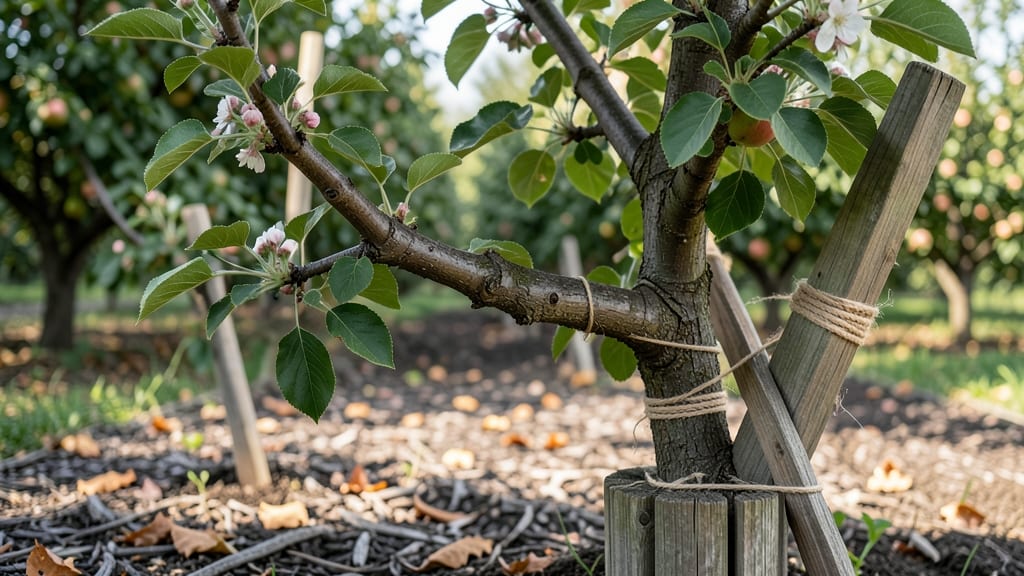
Apple tree branches need support to grow strong, not snap under their own weight. 🌳 I learned the hard way when my first tree's heavy limbs split during a spring storm—now I use sturdy stakes and spreaders to keep branches properly aligned from day one.
The right support prevents weak crotches, encourages upward growth, and protects against wind damage.
You'll need T-posts or wooden stakes (2-3 feet tall), tree ties or spreaders, and a pruning saw for adjustments. The key is timing: install support when branches are young and flexible, before they become too heavy.
For young trees, use 3-4 stakes spaced evenly around the trunk, while mature branches often need individual spreaders to guide their natural shape.
With proper support, your tree develops stronger wood fibers and better fruit-bearing structure. You'll notice branches growing straighter, with fewer splits and less risk of disease from broken limbs. The payoff comes in harvest season when your tree stands tall and productive—no more worrying about limbs crashing down mid-winter.
This method works for dwarf, semi-dwarf, and standard apple trees, though stake spacing adjusts based on tree size. Start young for best results, but even mature trees benefit from strategic support. Here's how to get started right—before next season's storms hit.
📚 In This Guide
- What you need
- Instructions
- Tips and common mistakes
- Wrapping up and next steps
What you need
- ● Stakes: 2–4 wooden or metal stakes (2–3 inches in diameter, 6–8 feet long). Opt for treated wood or galvanized metal for durability.
- ● Spreaders: 1–2 sturdy spreaders (e.g., T-post spreaders or tree ties with adjustable arms) to secure branches.
- ● Tree Ties: 4–6 soft, flexible ties (e.g., plastic-coated nylon or jute) to avoid damaging bark.
- ○ T-posts or Ground Anchors: 2–4 heavy-duty posts (optional but helpful for extra stability).
- ● Mallet or Hammer: For driving stakes into the ground.
- ● Measuring Tape: To ensure proper spacing and alignment.
- ● Pruners or Saw: For trimming excess branches if needed.
- ● Garden Gloves: To protect your hands while working.
- ● Rubber Mallet: For gentler stake insertion.
- ● Stake Guards: To prevent stake rot at the base.
- ● Adjustable Wrenches: For tightening spreaders securely.
How to install sturdy branch supports for young apple trees
Here's how I reinforce saplings so they grow straight and strong—no more flopping branches or weak crotches.
🪴 Step 1: Select and Install Proper Stakes
Drive two 4-foot wooden stakes into the ground on opposite sides of the trunk, about 12 inches apart. I use treated 2x2 stakes because they resist rot and provide maximum stability. Position them 6-8 inches from the trunk—too close and they'll damage the bark as the tree grows.
Angle the stakes slightly outward from the trunk to create a natural V-shape. This prevents the tree from leaning against the stakes as it grows. Use a mallet for clean, even placement—no need to pound them into the ground like tent pegs. The top of the stakes should extend about 2 feet above the tree's current height.
✂️ Step 2: Attach Spreaders for Branch Training
Install spreader bars at the first major branch union (usually 18-24 inches above ground). These Y-shaped devices gently push branches outward at the correct angle. I use adjustable metal spreaders because they last for years and won't degrade in the elements.
Position the spreader so the branches form a 45-60 degree angle from the trunk. This creates the ideal structure for fruit production. Secure each branch with soft tree ties—never use wire or anything that can cut into the bark. Tighten just enough to hold the branch in place; you should be able to slide a finger between the tie and the branch.
🌱 Step 3: Install Temporary Branch Supports
For any branches longer than 12 inches, add individual branch spreaders or small stakes. I like the lightweight plastic spreaders because they're easy to adjust as the tree grows. Place them at the branch midpoint to prevent sagging.
If you're working with a particularly heavy branch, use a single stake placed 3-4 inches away from the branch base. Tie the branch to the stake at two points—one near the trunk and one at the branch tip. This creates a triangle of support that distributes weight evenly. Check ties every 4-6 weeks and loosen if the branch has thickened.
💧 Step 4: Maintain and Adjust as the Tree Grows
Remove all supports when the trunk reaches 2 inches in diameter—usually after 2-3 growing seasons. I check my trees annually in early spring, before new growth begins. If a branch has grown too heavy for its support, add a temporary stake while you train it into a better position.
Never leave ties on permanently—they'll girdle the bark as the tree grows. Replace soft ties with wider ones as needed. You'll know the tree is properly supported when branches hold their shape without sagging, even after heavy fruit sets. The goal is to create a strong framework that will bear fruit for decades.
Tips & tricks for perfect apple tree branch support
These practical strategies will help you create a sturdy framework that supports strong growth and prevents common mistakes that compromise tree health.
Stake Placement Precision: When positioning your 4-foot stakes, use a small stake or marker to outline a perfect circle around the trunk at the 6-8 inch distance. This ensures consistent spacing on both sides. I've found that using a level helps maintain the outward angle—stakes should lean slightly away from the trunk to prevent future bark damage as the tree expands. The 2-foot height extension above the tree is critical for maintaining stability during windy conditions.
Spread Angle Secrets: For that ideal 45-60 degree branch angle, I recommend using a protractor or even a simple DIY angle guide made from scrap wood. This ensures branches develop properly for fruit production. When attaching spreaders, always position them slightly above the branch union—never directly at the junction—to avoid stressing the vulnerable growth point. The soft tree ties should be snug but not tight; think "finger-width" space between tie and branch.
Maintenance Calendar: Mark your calendar for that annual spring checkup before new growth begins. I use color-coded flags on my stakes to track which trees need adjustments. The 4-6 week tie-check interval is crucial—branches thicken quickly in spring, and ties that were perfect in winter can become too tight by summer. Replace any ties that show signs of fraying or that have darkened the bark underneath.
Material Alternatives: While I recommend treated 2x2 stakes for durability, you can substitute with heavy-duty plastic stakes or even metal rebar wrapped in rubber sleeves to protect the bark. For spreaders, lightweight aluminum versions work well if you prefer something that won't corrode. The key is maintaining the same structural integrity—the materials just need to last through multiple growing seasons without degrading.
Pro Tips for Apple Tree Branch Support
- These practical strategies will help you create a sturdy framework that supports strong growth and prevents common mistakes that compromise tree health.
- Stake Placement Precision: When positioning your 4-foot stakes, use a small stake or marker to outline a perfect circle around the trunk at the 6-8 inch distance.
- Spread Angle Secrets: For that ideal 45-60 degree branch angle, I recommend using a protractor or even a simple DIY angle guide made from scrap wood.
Frequently asked questions
Got questions about keeping your apple tree branches strong and supported? You’re not alone! Here are some of the most common concerns—and practical answers—to help you grow a thriving, sturdy tree.
When is the best time to install branch support?
The ideal time is early spring (before buds bloom) or late winter, when the tree is dormant but starting to grow. For young trees, install stakes or spreaders immediately after planting to prevent wind damage. Avoid supporting branches during heavy fruit-bearing seasons, as the weight can shift naturally.
How tight should the ties or straps be?
Ties should be snug but not cutting—think "finger-width" space between the strap and the branch. Check them every 2–4 weeks, especially after rain or wind. Use soft, flexible materials like tree ties or rubber straps to avoid bark damage. Pro tip: Loosen ties as branches thicken to prevent girdling!
Can I use wooden stakes instead of metal ones?
Yes! Wooden stakes (like cedar or pine) are a great eco-friendly alternative, especially for aesthetic gardens. However, they rot faster (last 1–2 years) and may not offer the same rigidity as metal or PVC. For heavy winds, pair wooden stakes with extra-wide spreaders or a second stake at a 45° angle.
What if my tree’s branches are already bending—can I still add support?
Even if branches are slightly bent, gentle support can help them straighten over time. For severely bent or broken branches, use 3-point support (one stake at the base, two spreaders along the bend) and monitor for 2–3 months. If the branch is snapped, prune it carefully to avoid disease.
How do I remove support stakes without harming the tree?
Wait until late fall or early winter when the tree is dormant. Gently untie the straps and remove stakes slowly to avoid shocking the roots. If the tree has grown too thick for the original stakes, replace them with wider spreaders or use spreader bars for gradual adjustment. Warning: Never remove stakes mid-growth season!
Bonus Tip: DIY Support Hacks
No stakes?
Use bamboo poles or old broom handles tied with soft fabric strips.
Wind-prone areas?
Bury stakes 1/3 of their length deeper for extra stability.
Heavy fruit load?
Add a second stake on the opposite side of the bend.
Wrapping up and next steps
Supporting your apple tree’s branches with sturdy stakes and spreaders isn’t just about aesthetics—it’s a game-changer for fruit production and long-term health. 🍏 By following the right techniques, you’ll ensure strong growth, better airflow, and a bountiful harvest for years to come.
Now that you’re equipped with the knowledge, roll up your sleeves and give your tree the support it deserves!
Ready to take action? Start by inspecting your tree today—identify branches that need support, gather your materials, and begin the process. Your future apple harvest will thank you!