
How To
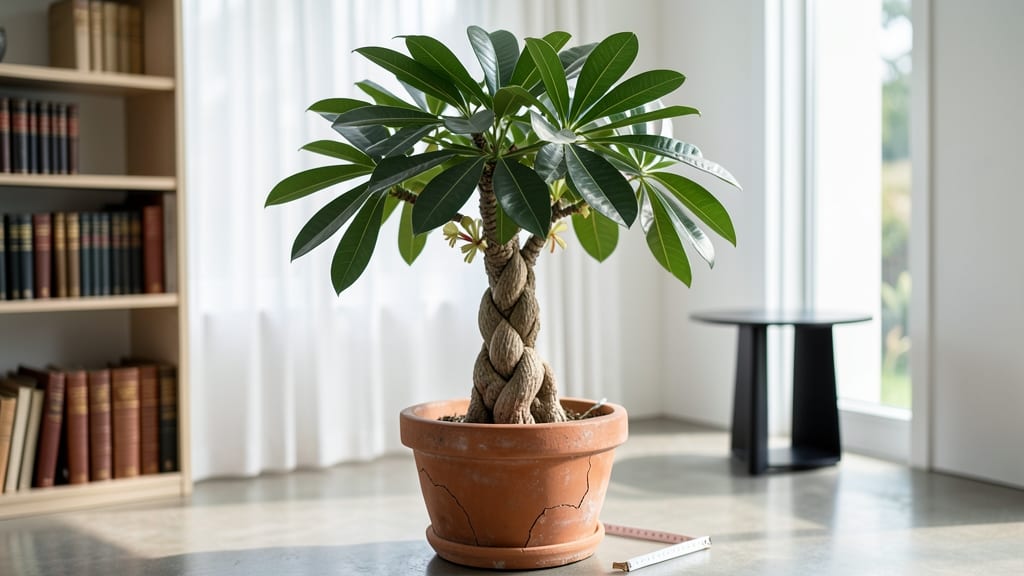
Money tree height by variety: indoor growth expectations explained
If you're admiring your money tree (Pachira aquatica) and wondering how tall it might grow indoors, the answer depends entirely on the variety you’ve chosen. Some varieties stay compact, while others can reach impressive heights with proper care.
Let’s break down the most common types and their indoor growth expectations to help you plan your space and care routine accordingly.
Your money tree’s mature height indoors typically ranges from 3 to 10 feet, but this can vary significantly based on the specific cultivar. For example, the classic ‘Money Tree’ variety tends to grow taller, while braided varieties often stay shorter unless given extra care.
Understanding these differences will help you choose the right variety for your home and manage its growth effectively.
| Variety | Mature Height Indoors | Growth Rate | Space Needs |
|---|---|---|---|
| Pachira aquatica 'Money Tree' | 6–10 ft | Moderate (1–2 ft/year) | Large room or ceiling |
| Pachira glabra 'Braided Money Tree' | 3–6 ft | Slow to moderate (6–12 in/year) | Medium to large room |
| Pachira aquatica 'Dwarf Money Tree' | 3–5 ft | Slow (4–8 in/year) | Small to medium room |
| Pachira aquatica 'Golden Money Tree' | 5–8 ft | Moderate (1–2 ft/year) | Large room or high ceiling |
The ‘Money Tree’ variety (Pachira aquatica) is the most common and can reach heights of 6 to 10 feet indoors with optimal care. This makes it a stunning centerpiece for spacious rooms or even small offices with high ceilings.
If you’re working with limited vertical space, consider the ‘Braided Money Tree’ (Pachira glabra), which typically maxes out around 3 to 6 feet and grows more slowly, making it ideal for smaller homes or apartments.
For those who love the look of a money tree but want to keep it compact, the ‘Dwarf Money Tree’ is an excellent choice. This variety rarely exceeds 5 feet indoors, even with careful pruning.
Its slower growth rate also means it requires less frequent maintenance, making it perfect for busy plant parents who still want the aesthetic appeal of a money tree without the commitment to a tall specimen.
Light plays a crucial role in determining how tall your money tree will grow. While these plants thrive in bright indirect light, they can become leggy and reach for the sky if placed in low-light conditions.
To encourage a fuller, bushier growth habit, position your money tree near an east or north-facing window, where it can receive 4 to 6 hours of indirect sunlight daily. Avoid placing it in direct sunlight, as this can scorch the leaves.
Pot size also influences height. If you want to control your money tree’s height, choose a smaller pot to restrict root growth, which in turn slows the plant’s upward expansion.
However, if you’re aiming for a taller tree, opt for a larger pot with well-draining soil and provide consistent care. Remember, a pot that’s 2 to 3 inches larger in diameter than the root ball is ideal for encouraging healthy growth without excessive height.
Pruning is another effective way to manage your money tree’s height. By trimming the top growth, you encourage the plant to branch out and grow wider rather than taller. This technique is especially useful for braided varieties, where maintaining the braided stems is a priority.
Use clean, sharp pruning shears to make cuts just above a leaf node, and don’t be afraid to prune back by one-third if your tree is becoming too tall for your space.
If you’re wondering how long it takes for a money tree to reach its mature height, expect it to grow 1 to 2 feet per year under ideal conditions.
With proper care, including regular pruning, adequate light, and balanced fertilization, you can shape your money tree to fit your home perfectly—whether that means a towering statement piece or a compact, manageable size.
🌿
How to control money tree height indoors: pruning, light, and care tips
If you're dreaming of a money tree that stays compact and lush instead of stretching toward the ceiling, you're in control—literally! With the right pruning techniques and light management, you can guide its growth to match your space.
The key lies in understanding when to trim and how to position your plant for balanced development.
Most money trees (Pachira aquatica) grow 6–10 feet tall indoors under ideal conditions, but they can easily be kept smaller with regular maintenance. The secret? Pruning at the right time and providing bright, indirect light to encourage bushier growth rather than leggy stems.
Let’s break down the steps to keep your money tree at your desired height.
If your money tree grows too slowly or develops weak, sparse branches, it’s often due to: - Overpruning (removing more than ⅓ of foliage at once) - Low light (causing leggy, stretched stems) - Root-bound pots (limiting nutrient uptake) Solution: Prune only in spring/summer and move to a sunny spot (east or north window).
Use well-draining soil and upgrade pots every 2–3 years to prevent stunted growth.
Start by pruning your money tree in late spring or early summer when it’s actively growing. Use clean, sharp pruning shears to cut just above a leaf node or branch junction.
This encourages new growth from the trimmed spot, creating a fuller shape. For a bushier look, trim back the top 2–3 inches of leggy stems—this redirects energy to side branches.
Light is another critical factor. Place your money tree near a bright, indirect light source, like an east or north-facing window. Avoid direct sunlight, which can scorch leaves, but don’t settle for dim corners—low light causes stretching and weak stems.
If your home lacks natural light, supplement with a grow light for 4–6 hours daily to maintain compact growth.
Watch out for common mistakes that accelerate height: overwatering (which weakens roots) or underwatering (stressing the plant). Stick to watering every 1–2 weeks when the top 1–2 inches of soil feel dry.
Also, avoid fertilizing heavily in winter, as this can spur rapid, unbalanced growth. Instead, feed with a balanced fertilizer (like 10-10-10) every 4–6 weeks during spring and summer.
For a dwarf money tree, consider topping (cutting the main stem just above a leaf node) to encourage multiple branches. Repot every 2–3 years to refresh the soil and give roots room to grow.
With these tips, your money tree will stay lush, manageable, and full of good fortune—without reaching for the ceiling! 🌿