
Diseases
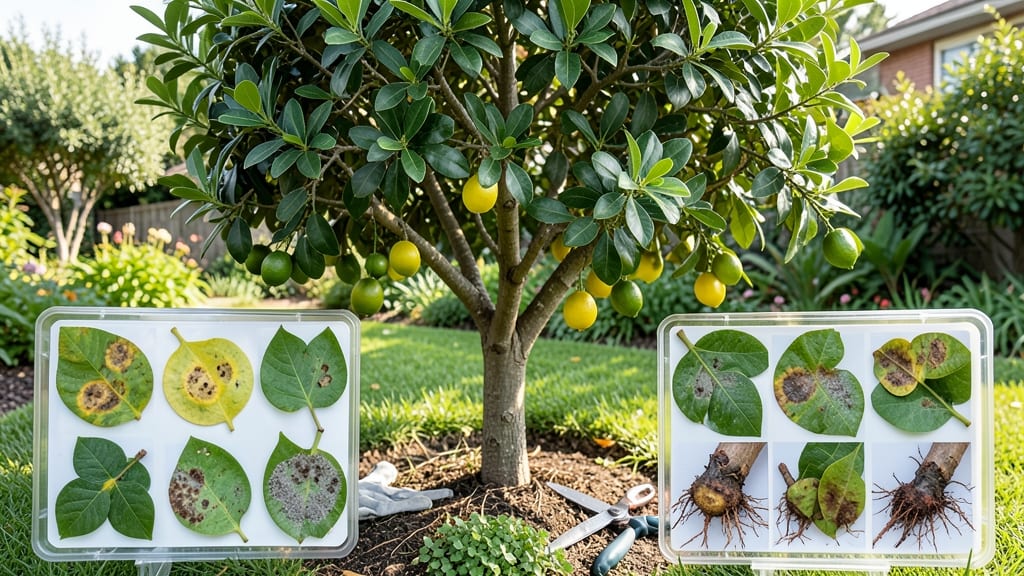
Your lime tree’s yellowing leaves and blackened stems might be screaming for help—here’s how to decode the symptoms before it’s too late with lime tree diseases pictures as your guide. 🌿 Fungal blights like anthracnose and citrus greening turn vibrant foliage into a cautionary tale, but catching them early means saving your tree.
This guide breaks down the visual red flags, from leaf spots to wilting branches, so you can act fast.
The culprits? Fungal spores hiding in damp soil, old prunings, or even last season’s fallen leaves. Anthracnose starts as dark, sunken spots on leaves, while citrus greening (HLB) drains greens into a sickly yellow—both spread faster than you’d think.
The key is acting at the first sign: prune infected branches 6 inches below the damage, then sterilize tools to stop the chain reaction.
You’ll learn to distinguish between treatable blights and chronic diseases like root rot, plus when to call in a pro. With the right fungicide (copper-based works best) and a cleanup routine, you can restore your tree’s health—and keep it thriving for years.
The first step? Matching symptoms to the pictures in this guide.
Works for backyard lime trees, container citrus, or even avocado trees facing the same threats. Let’s get your tree back to its lush, productive self—before the damage spreads further.
Underlying Causes Of Lime Tree Ailments
Lime trees, with their glossy leaves and fragrant blossoms, can fall victim to a variety of diseases, often triggered by specific environmental or biological factors. Understanding these causes is the first step toward prevention and treatment.
Below, we break down the key reasons lime trees develop diseases, backed by science and actionable insights.
---
Fungal pathogens are the most common culprits behind lime tree diseases, thriving in warm, humid conditions. These microscopic invaders exploit weak spots in the tree’s defenses, often entering through wounds, leaf surfaces, or even healthy tissue under the right circumstances.
- Overhead Watering & Poor Drainage 💦 Fungi like Phytophthora and Botryosphaeria spread rapidly when lime trees sit in waterlogged soil. Excess moisture softens bark and leaves, creating entry points for spores. Solution: Ensure proper drainage and water at the base (not overhead) to keep foliage dry.
- High Humidity & Lack of Airflow 🌬️ Stagnant air traps spores near the tree, increasing infection rates. Diseases like anthracnose and powdery mildew flourish in these conditions. Solution: Prune for better airflow and avoid dense planting near other trees.
- Weakened Tree Stress 🌡️ Stress from drought, nutrient deficiencies, or physical damage weakens a lime tree’s natural resistance. Fungi capitalize on this vulnerability. Solution: Maintain consistent watering, fertilize appropriately, and inspect for pests or physical injuries.
---
Pests don’t just feed on lime trees—they create wounds that invite fungal and bacterial invaders. Scale insects, aphids, and borers weaken the tree’s bark and leaves, making it easier for pathogens to take hold.
- Scale Insects & Sap-Sucking Pests 🐜 These pests excrete honeydew, a sticky residue that promotes sooty mold—a fungal growth that blocks sunlight and stresses the tree. Solution: Apply horticultural oil or insecticidal soap to control infestations before they spread.
- Bark-Boring Insects 🪰 Insects like bark beetles burrow into the tree, creating entry points for wood-rotting fungi like Fusarium. Solution: Inspect the trunk for holes or sawdust-like frass (insect droppings) and treat with systemic insecticides if needed.
---
Lime trees are sensitive to extreme weather, poor soil health, and improper care, all of which lower their disease resistance. These factors don’t cause diseases directly but pave the way for pathogens.
- Temperature Fluctuations ❄️☀️ Sudden cold snaps or heatwaves shock lime trees, making them susceptible to cold damage or heat stress, which weakens their immune response. Solution: Choose cold-hardy lime varieties for your climate and mulch to regulate soil temperature.
- Nutrient Deficiencies 🌿 A lack of nitrogen, potassium, or magnesium stunts growth and reduces disease resistance. Yellowing leaves (chlorosis) or stunted new growth are red flags. Solution: Conduct a soil test and amend with balanced fertilizer (e.g., 6-6-6 NPK ratio).
- Compacted or Poor Soil 🏗️ Roots struggle in dense, clay-heavy, or waterlogged soil, leading to root rot and fungal infections like Armillaria. Solution: Improve soil with compost or sand and avoid overwatering.
--- While fungi dominate lime tree diseases, bacteria and viruses can also cause significant damage, often spreading through contaminated tools, infected nursery stock, or sap-feeding insects.
- Bacterial Leaf Spot 🍃 Bacteria like Xanthomonas cause dark, water-soaked spots on leaves, leading to defoliation. Solution: Sterilize pruning tools with rubbing alcohol and remove infected leaves promptly.
- Citrus Tristeza Virus (CTV) 🦠 Spread by aphids, this virus causes stunting, leaf yellowing, and dieback in lime trees. Solution: Monitor for aphids, use reflective mulch to deter them, and remove infected trees to prevent spread.
--- Even well-meaning gardening practices can accelerate disease spread. Common mistakes include: - Overhead Irrigation (spreads spores) - Reusing Contaminated Tools (transfers pathogens) - Ignoring Pruning Wounds (invites fungal entry)
Pro Tip: Always sterilize tools with bleach (1 part bleach to 9 parts water), prune during dry weather, and avoid wounding trees unnecessarily. 💡
--- Understanding these causes empowers you to prevent, monitor, and treat lime tree diseases before they take hold. Next, we’ll explore how to spot these issues early using visual clues and diagnostic tools.
Fixing Fungal Blights Naturally
Now that you’ve identified the issue plaguing your lime tree—whether it’s anthracnose, citrus canker, or root rot—it’s time to take action. The good news? Most fungal diseases can be managed with a mix of proactive care, organic remedies, and smart prevention.
Below, we’ll break down step-by-step fixes tailored to each common lime tree disease, plus long-term strategies to keep your tree thriving.
---
🍳 Prune Infected Branches Start by removing all diseased leaves, twigs, and branches (up to 6–12 inches below the infection). Bag them and dispose of them in the trash—not the compost! Use sterilized pruners (wipe with rubbing alcohol) to avoid spreading spores.
👨🍳 Apply Fungicide Sprays For severe cases, mix 1 tsp baking soda + 1 tbsp horticultural oil + 1 quart water + a drop of dish soap (as a surfactant). Spray every 7–10 days until new growth appears. For stronger protection, use copper fungicide (follow label rates).
🥘 Boost Tree Health - Water at the base (avoid wetting leaves) to reduce humidity. - Mulch with 3–4 inches of organic mulch (wood chips, straw) to improve soil drainage. - Fertilize lightly with a balanced citrus fertilizer (6-6-6 or 8-3-9) in early spring.
---
⏰ Remove and Destroy Infected Areas Cut out cankers (raised, oozing lesions) with a sterilized knife, extending ½ inch beyond the affected area. Burn or trash the clippings—do not compost!
🎯 Copper Spray Treatment Spray copper fungicide (like Copper Sulfate 5-10-10) every 7–14 days during wet seasons. For a DIY version, mix 1 tbsp copper sulfate + 1 gallon water + 1 tsp soap (shake well before use).
💡 Prevention Tips - Avoid overhead watering—use drip irrigation instead. - Space trees properly (15–20 ft apart) for better airflow. - Clean tools after pruning with bleach solution (1 part bleach:9 parts water).
--- 🔪 Improve Drainage Immediately - Dig a shallow trench around the tree to redirect water away from roots. - Aerate compacted soil with a garden fork (loosen soil 12–18 inches deep). - Raise the tree (if in a pot) or build a berm (mound of soil) around the base to prevent water pooling.
🌱 Adjust Watering Habits - Water deeply but infrequently—lime trees hate soggy roots. - Test soil moisture before watering (stick your finger 2 inches down—if dry, water; if wet, wait). - Use a moisture meter for accuracy (aim for 40–60% moisture).
🌿 Fungal Remedies - Apply hydrogen peroxide (3%) to soil (1 cup per gallon of water) to kill fungus without harming roots. - Sprinkle mycorrhizal fungi (like MycoApply) to outcompete root rot pathogens. - Avoid synthetic fertilizers—switch to compost tea or fish emulsion for gentle nutrition.
--- 🌡️ Monitor Humidity & Airflow - Prune regularly to open up the canopy (aim for 6–8 hours of sunlight daily). - Use a fan (on low) near the tree in humid climates to reduce spores. - Plant companion trees (like neem or eucalyptus) that repel fungal spores.
🧼 Sanitize Everything - Sterilize tools between cuts with rubbing alcohol or bleach. - Clean up fallen leaves weekly (fungi thrive in debris). - Disinfect pots (if potted) with vinegar solution (1:3 ratio).
📊 Schedule Proactive Sprays - Spring & Fall: Apply neem oil spray (1 tsp neem oil + 1 tsp soap + 1 quart water) as a preventive barrier. - During Rainy Seasons: Reapply copper or sulfur-based fungicides every 4–6 weeks.
--- If your lime tree shows: ✅ Wilted leaves despite watering ✅ Large, spreading cankers ✅ Mushrooms at the base (sign of advanced root rot) …it may need professional intervention. A certified arborist can assess soil health, structural damage, or systemic treatments (like Arborist’s Solution fungicide).
--- Remember: The key to long-term success is consistency. Fungal diseases don’t disappear overnight, but with diligent care, your lime tree can bounce back stronger—and stay disease-free for years! 🌿💚
Frequently asked questions
What are the most common lime tree diseases I should watch for?
Look for anthracnose (dark sunken leaf spots), citrus canker (raised oozing lesions), and root rot (mushrooms at the base). These three cause the most damage, but citrus greening (HLB) and powdery mildew also appear frequently. Early symptoms include yellowing leaves, wilting branches, or unusual leaf drop.
How can I tell if my lime tree has root rot?
Check for mushrooms growing at the base, yellowing leaves despite regular watering, and roots that look dark, mushy, and foul-smelling. If the tree leans or falls easily when tugged, root rot has likely weakened its structure. Dig carefully to inspect roots—healthy ones should be firm and white.
Can I save my lime tree if it has citrus greening (HLB)?
Unfortunately, HLB has no cure—once infected, the tree will decline over 1-5 years. The best approach is to remove and destroy the tree immediately to prevent spread to other citrus plants. Sterilize tools with bleach and monitor nearby trees for symptoms like yellowing leaves and stunted growth.
What’s the best fungicide for lime tree diseases?
For most fungal issues, copper-based fungicides (like Copper Sulfate) work best when applied every 7-14 days during wet seasons. A baking soda spray (1 tsp baking soda + 1 tbsp oil + 1 quart water) is a great organic alternative for mild cases. Always follow label instructions for safety and effectiveness.
When should I call a professional arborist?
Consult an arborist if you see large spreading cankers, mushrooms at the base, or severe wilting despite treatment. They can diagnose advanced cases like root rot or systemic infections and recommend professional treatments. For minor issues, home remedies often work—but don’t wait until the tree is beyond saving!