
Pruning
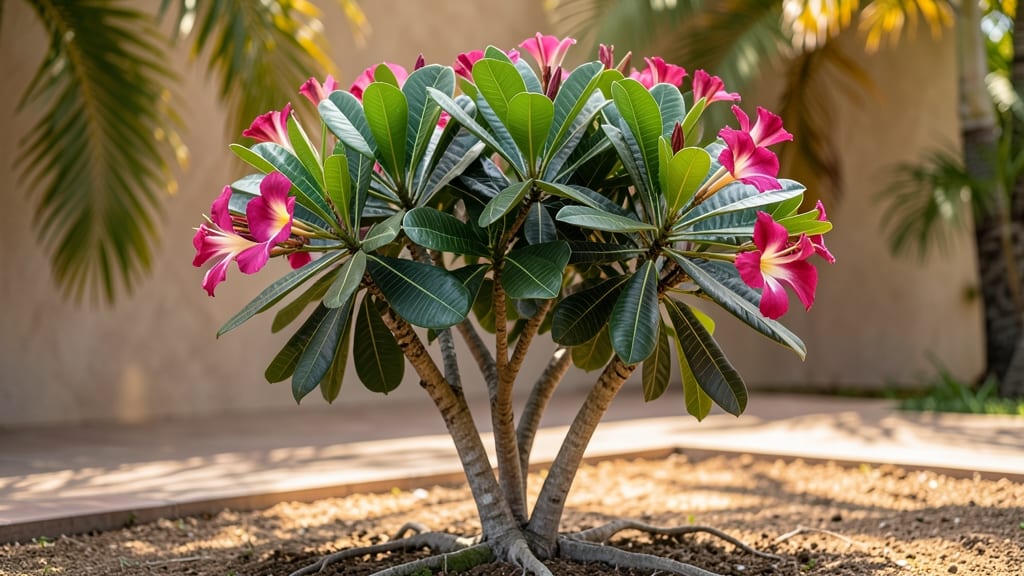
A plumeria tree in Arizona’s brutal sun turns most tropical plants into crispy souvenirs—but not plumeria. 🌵 These drought-resistant varieties thrive in desert heat, blooming with fragrant white and pink flowers that make your patio smell like a Hawaiian vacation (without the plane ticket).
I’ve grown them here for five years, and the secret isn’t fancy tricks—it’s matching their needs to the desert’s rhythm.
Start with the right variety: ‘Ice Cream’ or ‘Singapore Pink’ handle Arizona’s extremes best. Plant in well-draining cactus soil (no regular dirt—roots rot fast here), and give them a spot with 6+ hours of sun daily—shade cloth in summer prevents leaf scorch.
The key? Watering deep but infrequent—once a week in summer, monthly in winter—mimicking monsoon patterns instead of daily sprinkles.
By late spring, you’ll see those iconic waxy blooms opening at dawn, filling the air with a sweet, tropical scent. Prune after flowering to shape the tree and encourage bushier growth, but never cut more than one-third at once—plumerias hate heavy pruning.
The best part? They’re basically pest-proof in the desert, so no chemicals needed.
Works in containers too—just use a pot with drainage holes and move it under shade during 110°F+ heatwaves. Once established, they’ll reward you with blooms for 10+ years with almost no fuss. Ready to turn your yard into a fragrant oasis without the tropical guilt?
📚 In This Guide
- What you need
- Instructions
- Tips and common mistakes
- Wrapping up and next steps
What you need
- ● Plumeria plant: 1 nursery-grown sapling (3–6 ft tall, Plumeria rubra, Plumeria obtusa, or hybrid varieties like 'Ice Cream' or 'Singapore Pink')
- ● OR 3–5 healthy cuttings (4–6 inches long, ½-inch diameter, with 2–3 nodes)
- ● OR Seeds (if starting from scratch; germination rates are low, so plan for 10+ seeds)
- ● Well-draining soil: 10–20 cubic feet of cactus/succulent mix (or 50% potting soil + 50% perlite/pumice)
- ● Container or planting site: For containers: 1–2 large pots (12–18 inches deep, with drainage holes) per plant
- ● For in-ground: A hole twice as wide as the root ball + 6 inches deeper
- ● Fertilizer: 1 bag of balanced, slow-release fertilizer (10-10-10 or 8-3-9) or 1 bottle of fish emulsion (for organic option)
- ● Drought-resistant mulch: 5–10 cubic feet of gravel or bark chips (to retain moisture and regulate soil temp)
- ● Pruning tools: 1 pair of sterilized pruning shears (for shaping and cutting)
- ● 1 sharp bypass pruner (for larger branches)
- ○ Rooting hormone: 1 small bottle (optional but recommended for cuttings)
- ● Watering can or hose with shut-off nozzle (for gentle watering)
- ● pH testing kit (to ensure soil pH is 6.0–7.0)
- ● Shade cloth (30–50% coverage for young plants during extreme heat)
- ● Slow-drip irrigation system (for established trees in desert climates)
- ● Gloves (to protect hands from sap and thorns)
- ● Stakes and ties (for supporting tall or leggy plants)
Step-by-Step instructions for growing Plumeria trees in Arizona's desert climate
Here's how to establish thriving plumeria trees that love Arizona's heat and drought.
🪴 Step 1: Select the Right Drought-Tolerant Varieties
Choose Plumeria rubra or Plumeria obtusa for Arizona's climate—both handle 100°F+ temperatures and minimal water once established. Avoid tropical varieties like Plumeria alba, which struggle in desert heat. I always pick rooted cuttings over seedlings because they adapt faster to local conditions. Look for healthy cuttings with 3-4 nodes and no signs of pests.
If buying potted trees, inspect the roots—healthy ones should be white and fibrous, not brown or mushy. Avoid trees with yellowing leaves or soft stems, as these indicate poor health. The right variety makes all the difference in survival rates during Arizona's brutal summers.
☀️ Step 2: Plant in Well-Draining Soil with Full Sun Exposure
Plumeria trees need full sun—at least 6-8 hours daily—so plant them in the southwest corner of your yard where they won’t be shaded by walls or other plants. Arizona's alkaline soil drains poorly, so amend it with 50% cactus/succulent mix and 50% native desert soil to improve drainage. I always add a 2-inch layer of coarse sand at the bottom of the planting hole to prevent root rot.
Dig a hole twice as wide as the root ball but only as deep—planting too deep suffocates the roots. Gently loosen the roots if they're circling and position the tree so the top of the root ball sits level with the ground. Backfill with the amended soil mix, tamping lightly to remove air pockets.
💧 Step 3: Water Deeply but Infrequently During Establishment
Water deeply once a week for the first month to encourage deep root growth, then every 10-14 days once established. Plumeria trees store water in their thick stems, so overwatering is worse than underwatering. I always check moisture by sticking my finger 2 inches into the soil—if it's dry, water; if damp, wait. Use drip irrigation or soaker hoses to avoid wetting the leaves, which can cause fungal issues.
After the first month, reduce watering to once every 2-3 weeks, even during summer. The key is letting the tree develop drought tolerance—stress from occasional dry spells actually strengthens the plant. Mulch with 2 inches of gravel (not organic mulch) to retain moisture and regulate soil temperature.
✂️ Step 4: Prune Strategically to Encourage Full, Floral Growth
Prune right after flowering (late spring) to shape the tree and encourage new blooms. Remove dead, crossing, or weak branches first, then cut back overgrown stems to just above a leaf node. I never prune more than one-third of the tree at once—this prevents shock. Sterilize pruners with rubbing alcohol between cuts to avoid spreading disease.
Plumeria trees bloom on new wood, so avoid heavy pruning in fall or winter. If your tree gets leggy, prune selective branches to open the center for better airflow and sunlight penetration. The goal is a rounded, bushy shape with plenty of flower buds forming at the tips.
🌿 Step 5: Protect from Frost and Winter Dormancy
Arizona's rare frosts (below 32°F) can kill plumeria trees, so cover young trees with frost cloth or move potted trees to a sheltered spot. Mature trees handle light frosts better but may drop leaves—don’t panic, as they’ll regrow in spring. I always reduce watering in winter to once a month, as the tree enters dormancy.
Fertilize lightly in early spring with a balanced 10-10-10 fertilizer to jumpstart growth. Avoid high-nitrogen fertilizers, which promote leafy growth at the expense of flowers. The first blooms usually appear in late spring, signaling the tree has adapted successfully to Arizona’s climate.
Tips & tricks for growing thriving Plumeria trees in Arizona
Here's what I've learned after helping plumeria trees thrive in Arizona's unforgiving desert climate.
Variety Matters: In Step 1, when selecting your Plumeria rubra or Plumeria obtusa, pay special attention to the 3-4 nodes requirement. These nodes are where new growth emerges, and having the right number ensures your tree establishes strong roots quickly. I've found that cuttings with more than 4 nodes often develop uneven growth patterns, while those with fewer than 3 take too long to establish. Look for cuttings where the nodes are plump and green, not shriveled or brown. This single detail can mean the difference between a struggling plant and one that blooms beautifully within a year.
Soil Science: The soil amendment mix in Step 2 is non-negotiable for Arizona's alkaline conditions. I've seen many well-intentioned gardeners skip the 50% cactus/succulent mix portion, thinking native soil alone would suffice. The cactus mix provides that crucial 2-inch sand layer at the bottom, which prevents root rot by ensuring excess water drains away immediately. Pro tip: If you can't find cactus mix locally, substitute with perlite or pumice—both work equally well to improve drainage. The key is creating that air pocket at the bottom of the planting hole.
Watering Wisdom: During the critical first month in Step 3, don't rely solely on the once-a-week schedule if temperatures exceed 100°F. I've learned this the hard way—trees planted in peak summer heat need that extra attention. Check soil moisture daily during heatwaves by sticking your finger 2 inches deep. If it's bone dry, water immediately. The goal is to keep the roots consistently moist but never soggy. Once established, you can trust the 10-14 day schedule, but even then, a quick finger check before watering prevents overwatering, which is the #1 killer of plumeria trees in Arizona.
Pruning Precision: When pruning in Step 4, I always mark my cuts with a pencil before making them. This helps me visualize the final shape and ensures I'm cutting just above a leaf node. The one-third rule is critical—never exceed this in a single session. I've seen trees go into shock after aggressive pruning, especially when combined with Arizona's intense sun. Another pro move: Prune in the early morning when temperatures are cooler. The tree has the whole day to recover before the afternoon heat sets in, and you'll notice less stress response in the leaves.
Pro Tips for Plumeria Tree Arizona
- Here's what I've learned after helping plumeria trees thrive in Arizona's unforgiving desert climate.
- Variety Matters: In Step 1, when selecting your Plumeria rubra or Plumeria obtusa, pay special attention to the 3-4 nodes requirement.
- Soil Science: The soil amendment mix in Step 2 is non-negotiable for Arizona's alkaline conditions.
Frequently asked questions
Got questions about growing plumeria trees in Arizona’s desert climate?
You’re not alone! Here are some of the most common concerns—and straightforward answers—to help you cultivate thriving, fragrant plumeria blooms with ease.
Can plumeria trees survive Arizona’s extreme heat and drought?
Plumeria trees are built for desert conditions. Once established, they thrive in Arizona’s heat and drought with minimal watering (about once a week in summer, less in winter). Just ensure well-draining soil and full sun exposure to keep them happy. Pro tip: Mulch around the base to retain moisture and protect roots from scorching.
When is the best time to plant plumeria trees in Arizona?
The ideal window is late spring to early summer (May–June), after the last frost risk has passed. This gives roots time to establish before Arizona’s brutal summer heat. Avoid planting in winter—plumerias despise cold snaps and may struggle to recover. For potted plumeria, transplant in spring for best results.
How do I revive a plumeria tree that’s not blooming?
Non-blooming plumerias often need a little TLC. First, check for overwatering (plumerias hate soggy roots) or nutrient deficiencies (feed with a balanced fertilizer in spring). Prune leggy growth to encourage bushier shapes, and ensure it gets 6+ hours of direct sun daily. If it’s young, be patient—some varieties take 2–3 years to bloom!
Are there drought-resistant plumeria varieties perfect for Arizona?
Yes! Opt for Plumeria rubra (red/pink blooms) or Plumeria obtusa (fragrant white/yellow flowers)—both handle heat and drought like pros. For extra resilience, choose ‘Hawaiian Snow’ or ‘Ice Cream’ varieties, bred for desert climates. Always check local nurseries for Arizona-specific hybrids!
Why are my plumeria leaves turning yellow or dropping?
Yellowing leaves usually signal overwatering or root rot, while dropping leaves may mean stress from heat, transplant shock, or pests. Adjust your watering schedule (let soil dry between waterings), inspect for aphids or mealybugs, and ensure proper drainage. If roots look mushy, trim affected areas and repot in fresh, dry soil.
Can I grow plumeria from cuttings in Arizona?
Take semi-hardwood cuttings in late summer (August–September) when new growth is mature but not woody. Let them dry for 1–2 days to form a callus, then plant in cactus/succulent mix. Keep lightly moist (not soggy) and place in bright, indirect light until roots form (4–6 weeks). Arizona’s humidity is perfect for rooting!
Wrapping up and next steps
Growing a plumeria tree in Arizona is a rewarding journey that brings fragrant blooms and desert charm to your space! With the right drought-resistant varieties and care tips, you’ll enjoy vibrant flowers year after year—even in the harshest desert conditions. 🌵✨
Ready to take the next step? Start by choosing your favorite variety (like the Maui Pink or Singapore White) and plant it in well-draining soil with full sun exposure.
Keep an eye on watering needs and prune regularly to encourage healthy growth. Soon, your desert oasis will be blooming with beauty!