
Pruning
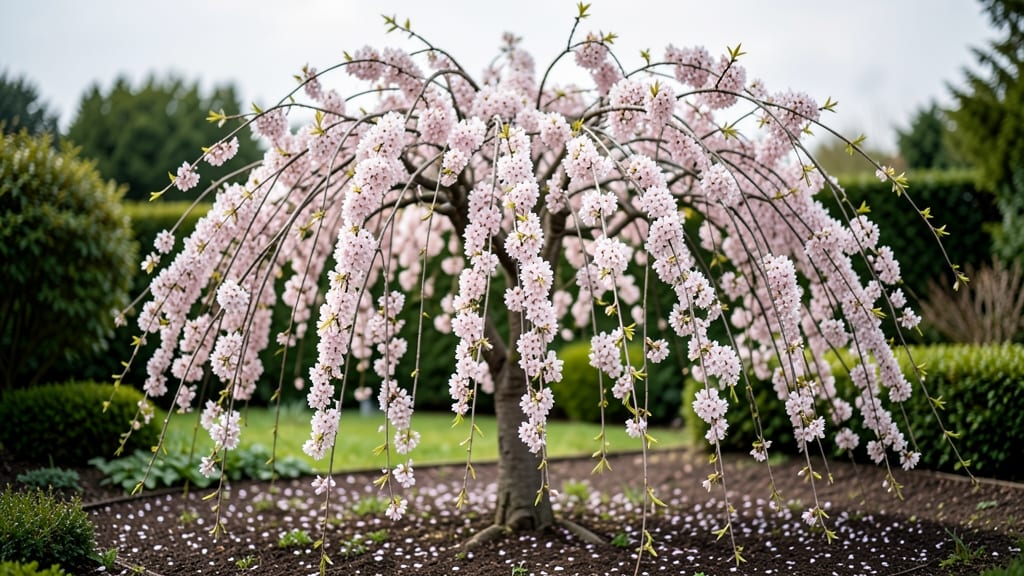
A weeping Yoshino cherry tree 🌸 grows to a dramatic 15–30 feet tall with a sweeping spread of 10–20 feet, making it a showstopper for any landscape—but its size demands careful planning before you plant.
Picture this: a cascading canopy of delicate pink blossoms arching over a patio or garden path, but without knowing its mature dimensions, you might end up with a tree that crowds your space or overshadows your home.
The right spacing and pruning strategy can keep it in check while preserving its breathtaking form.
Most gardeners underestimate how quickly these trees grow—expect 2–3 feet per year in ideal conditions. That means a sapling today could be a towering beauty in just a decade, so planting it 15–20 feet away from structures or other plants is non-negotiable for long-term harmony.
In this guide, I’ll break down the exact height and spread ranges by variety, spacing rules to avoid future headaches, and pruning tips to shape it without sacrificing those stunning flowers. Let’s get your Yoshino cherry tree off to the right start.

Weeping Yoshino cherry tree mature height by variety: what to expect
Choosing a weeping Yoshino cherry tree for your landscape means embracing a stunning springtime display, but understanding each variety’s mature size helps you plan for long-term beauty.
These trees are famous for their cascading branches and delicate pink blossoms, but their growth habits vary significantly. Mature height and canopy spread dictate where you can plant them without crowding structures or other plants.
If you’re envisioning a smaller weeping cherry for a compact yard, some varieties stay under 20 feet tall, while others grow taller than a two-story house. The key is matching the variety to your space.
For example, 'Pendula' is a classic choice, but 'Tama-no-Ue' offers a more compact form. Let’s break down what to expect from each popular variety so you can make the best selection for your garden.
| Variety | Mature Height (ft) | Canopy Spread (ft) | Growth Habit | Notes |
|---|---|---|---|---|
| 'Pendula' | 20–30 ft | 15–25 ft | Upright trunk with weeping branches | Classic variety; needs space for full spread |
| 'Tama-no-Ue' | 15–20 ft | 12–18 ft | More compact weeping form | Ideal for smaller yards; slower growth |
| 'Shidare Yoshino' | 18–25 ft | 15–20 ft | Dense, cascading branches | Vigorous grower; needs support for heavy branches |
| 'Pendula Aurea' | 20–25 ft | 15–20 ft | Golden foliage; weeping form | Stunning fall color; needs full sun |
| 'Mount Fuji' | 12–15 ft | 10–12 ft | Dwarf weeping form | Best for containers or small gardens |
The 'Pendula' variety is the most well-known and often reaches heights of 20–30 feet with a sprawling canopy that can stretch 15–25 feet wide. This makes it a showstopper for large properties, but it requires careful planning to avoid overpowering smaller spaces.
If you’re working with limited room, 'Tama-no-Ue' is a fantastic alternative, typically maturing between 15–20 feet tall and 12–18 feet wide.
For those who love the dramatic look of a weeping cherry but want a more manageable size, 'Mount Fuji' is a dwarf variety that tops out around 12–15 feet.
It’s perfect for containers or small yards where you still want that iconic cascading effect without the commitment to a large tree. However, even dwarf varieties need space—'Mount Fuji' still spreads 10–12 feet, so it’s not ideal for tight corners.
When selecting a variety, also consider the growth rate and canopy density. Faster-growing varieties like 'Shidare Yoshino' can reach 18–25 feet in just a decade, while slower growers like 'Tama-no-Ue' take longer to mature but require less frequent pruning.
Dense canopies, like those of 'Pendula Aurea', also mean heavier branches that may need structural support as the tree ages.
Another critical factor is the trunk structure. Some weeping Yoshino varieties develop a single upright trunk with cascading branches, while others may have multiple trunks or a more bushy form.
For example, 'Shidare Yoshino' often has a multi-stemmed base, which can create a fuller, more natural look but may also require additional support as the branches grow heavier with age.
If you’re planting near a patio, driveway, or power lines, always account for the mature spread of the variety you choose. A 'Pendula' with a 25-foot spread could easily encroach on walkways or block sunlight from other plants if not given enough room.
I recommend planting weeping Yoshino cherry trees at least 15–20 feet away from structures, sidewalks, or other trees to allow for full, unobstructed growth.
Finally, don’t overlook the soil and sunlight requirements when planning for size. Weeping Yoshino cherries thrive in full sun (6+ hours daily) and well-draining soil. Poor soil conditions can stunt growth or lead to weak branches, which may not support the tree’s mature weight.
Amending your soil with compost and ensuring proper drainage will help the tree reach its full potential height and spread.
Before you plant, sketch a rough layout of your garden, including the mature size of your chosen variety. This simple step can save you from future headaches—like pruning back a tree that’s outgrown its space or dealing with branches that sag onto roofs or sidewalks.
With the right variety and planning, your weeping Yoshino cherry tree will become the centerpiece of your spring garden for decades to come. 🌸
Ideal spacing and planting guidelines for weeping Yoshino cherry trees
When planting a weeping Yoshino cherry tree, spacing is one of the most critical factors for long-term success. These trees can reach 15 to 30 feet tall with a spread of 15 to 25 feet, making proper placement essential to avoid future crowding or structural issues.
I always recommend giving these trees plenty of room to grow—20 feet apart is ideal for a single specimen, while 30 feet apart works best when planting multiple trees.
Another key consideration is soil preparation. Weeping Yoshino cherries thrive in well-draining, slightly acidic soil with a pH between 5.0 and 6.5. Before planting, I mix compost or aged manure into the soil to improve fertility and drainage.
If your soil is heavy clay, amending it with sand or organic matter can prevent root rot, which is a common issue for these moisture-sensitive trees.
🌳 Weeping Yoshino Cherry Tree Spacing & Planting Essentials
| Requirement | Specification |
| Mature Height | 15–30 ft |
| Mature Spread | 15–25 ft |
| Ideal Spacing | 20–30 ft apart |
| Planting Depth | 2–3 ft deeper than pot |
| Soil pH | 5.0–6.5 |
| Sunlight Needs | Full sun (6+ hrs/day) |
💡 Pro Tip: Plant in late winter or early spring (after last frost) to align with natural growth cycles and ensure strong root establishment before summer heat.
For placement strategies, I always prioritize full sun exposure—at least 6 hours of direct sunlight daily. These trees perform best when planted in open areas where their branches can cascade freely without obstruction.
If you're planting near a patio or walkway, leave extra space to accommodate their wide-spreading branches, which can reach up to 25 feet wide at maturity.
One common mistake I see is planting weeping Yoshino cherries too close to structures or power lines. Their weeping branches can grow quite heavy, and over time, they may sag toward buildings or interfere with utility lines.
If space is limited, consider a dwarf variety (though true dwarf weeping Yoshinos are rare) or opt for a container-grown specimen that can be moved as it grows.
Finally, mulching is a game-changer for these trees. I recommend applying a 3-inch layer of mulch around the base (but not touching the trunk) to retain moisture and regulate soil temperature.
Use organic mulch like wood chips or shredded bark, and replenish it annually to maintain its effectiveness. This simple step can significantly reduce watering needs and improve overall tree health.
With the right spacing, soil prep, and placement, your weeping Yoshino cherry tree will thrive for decades, becoming the centerpiece of your garden during spring blooms. Just remember: patience is key—these trees grow slowly but reward you with stunning pink blossoms every year! 🌸