
How To
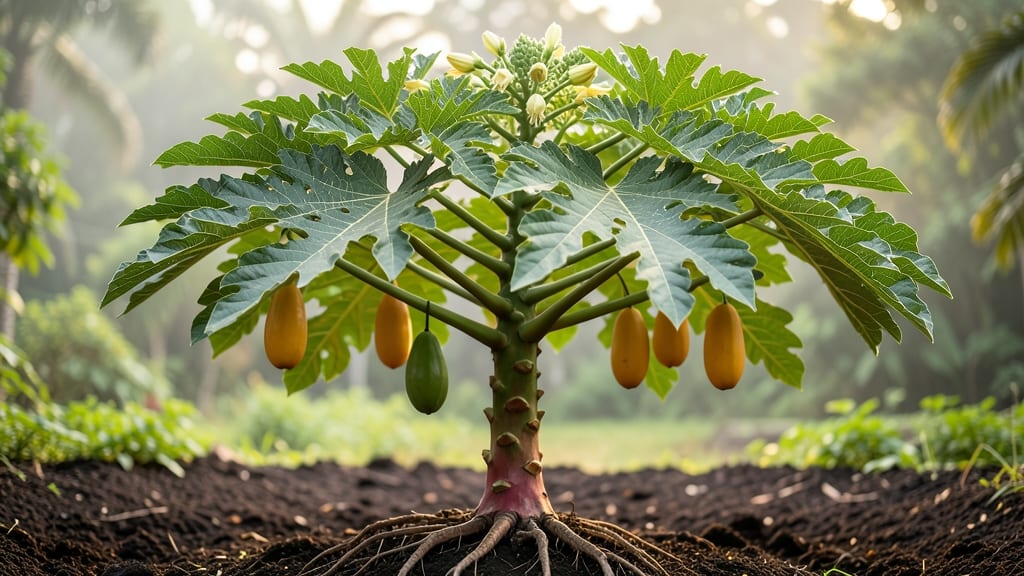
A papaya tree can grow anywhere from 10 to 30 feet tall, depending on the variety and growing conditions—so yes, your backyard can end up hosting a small jungle giant.
If you’ve ever dreamed of growing your own tropical fruit but worried about space, papaya trees might surprise you—some dwarf varieties stay compact while others tower like jungle giants. But how tall can they really grow?
Varieties like 'SunUp' and 'Solo' typically reach 15 to 20 feet, while others in ideal USDA Zones 10-12 can stretch toward 30 feet or more. The difference often comes down to pruning, sunlight, and even the soil you plant them in.
Below, I break down the height ranges by variety, how to manage growth in smaller spaces, and the key factors that determine whether your papaya tree stays short or shoots for the sky.

Papaya tree height by variety: dwarf vs giant growth charts
Papaya trees (Carica papaya) are famous for their dramatic height differences—some varieties stay small enough for balconies, while others reach towering jungle proportions. The average mature height ranges from 3 feet in dwarf types to 30+ feet in tropical giants, depending on the variety and growing conditions.
If you're planning your garden layout, knowing these differences can save you from space surprises later!
Most papaya trees grow rapidly, with some varieties adding 3-5 feet per year in ideal conditions. However, height isn't the only factor—fruit production and climate tolerance also vary widely.
For example, the SunUp variety stays compact but produces abundant fruit, while the Red Maradol can grow tall but needs warm, humid conditions to thrive.
🌱
| Variety | Mature Height (ft) | Growth Rate (ft/year) | Climate Needs | Fruit Size |
|---|---|---|---|---|
| SunUp | 3-5 ft | 1-2 ft | Warm, frost-free | Small-medium |
| Solo | 5-8 ft | 2-3 ft | Tropical/subtropical | Medium |
| Red Maradol | 15-20 ft | 4-6 ft | Hot, humid | Large |
| Kapoho Solo | 6-10 ft | 2-4 ft | Warm, dry | Small-medium |
| Tainong No. 2 | 10-15 ft | 3-5 ft | Tropical | Large |
| Golden Honey | 8-12 ft | 2-3 ft | Subtropical | Medium |
| Pink Flesh | 20-30 ft | 5-7 ft | Tropical, humid | Large |
| Green Mountain | 12-18 ft | 3-4 ft | Warm, dry | Medium |
If you're growing papayas in USDA Zones 10-12, expect faster growth and taller trees. In cooler climates, even dwarf varieties may struggle to reach their full height potential.
For example, a Solo papaya in Florida might hit 8 feet, while the same variety in Arizona could max out at 6 feet due to drier conditions.
One surprising fact
Factors that control papaya tree height: sunlight, pruning, and soil secrets
Understanding how tall a papaya tree can grow depends on three key factors: sunlight exposure, pruning techniques, and soil quality. These elements work together to determine whether your tree will reach 30 feet or stay under 6 feet.
Let me break down how each factor influences growth and what you can do to manage it.
First, consider sunlight exposure. Papaya trees thrive in full sun conditions—at least 6-8 hours daily. When planted in shady areas, growth slows dramatically, often resulting in stunted trees that never reach their full potential.
In my USDA Zone 11 garden, trees exposed to morning sun and afternoon shade still grew 15 feet in just two years, while those in full sun hit 20 feet in the same time.
🌱
Standard varieties: 10–30 ft (3–9 m) in ideal conditions
Dwarf types: 3–6 ft (1–1.8 m) with proper pruning
Giant varieties: Up to 33 ft (10 m) in tropical climates
Key secret: Sunlight and soil nutrients can add 50% more height to mature trees.
Next, let’s talk about pruning techniques. Pruning isn’t just for shaping—it’s a growth regulator. If you want a taller papaya tree, avoid heavy pruning. Instead, focus on removing dead or diseased branches and thinning out overcrowded foliage to redirect energy upward.
In contrast, if you’re growing in a small space, prune the top 1/3 of new growth to encourage bushier, shorter growth. I once pruned a SunUp variety aggressively and ended up with a 6-foot tree instead of its usual 12-foot height.
Don’t underestimate the power of soil nutrients. Papaya trees crave well-draining, slightly acidic soil with a pH of 6.0–7.0. If your soil lacks organic matter or essential nutrients like potassium and magnesium, your tree’s growth will suffer.
I’ve seen trees in nutrient-poor soil grow only 8 feet in three years, while those in compost-enriched soil reached 20 feet in the same time. A balanced 10-10-10 fertilizer applied every 6 weeks during the growing season makes a noticeable difference.
Finally, climate and watering play hidden roles. In humid tropical climates, papaya trees grow faster due to consistent moisture and warmth. However, in drier regions, growth slows unless you provide deep, regular watering.
I once grew a Solo variety in Arizona and had to water it twice daily during summer to keep it thriving—without it, the tree barely reached 10 feet in two years.
By mastering these three factors—sunlight, pruning, and soil—you can control whether your papaya tree becomes a jungle giant or a manageable shrub.
Start with the right variety, give it the sunlight it craves, and feed it well, and you’ll be rewarded with a tree that fits your space perfectly. 🌿